
Last updated November 21, 2026
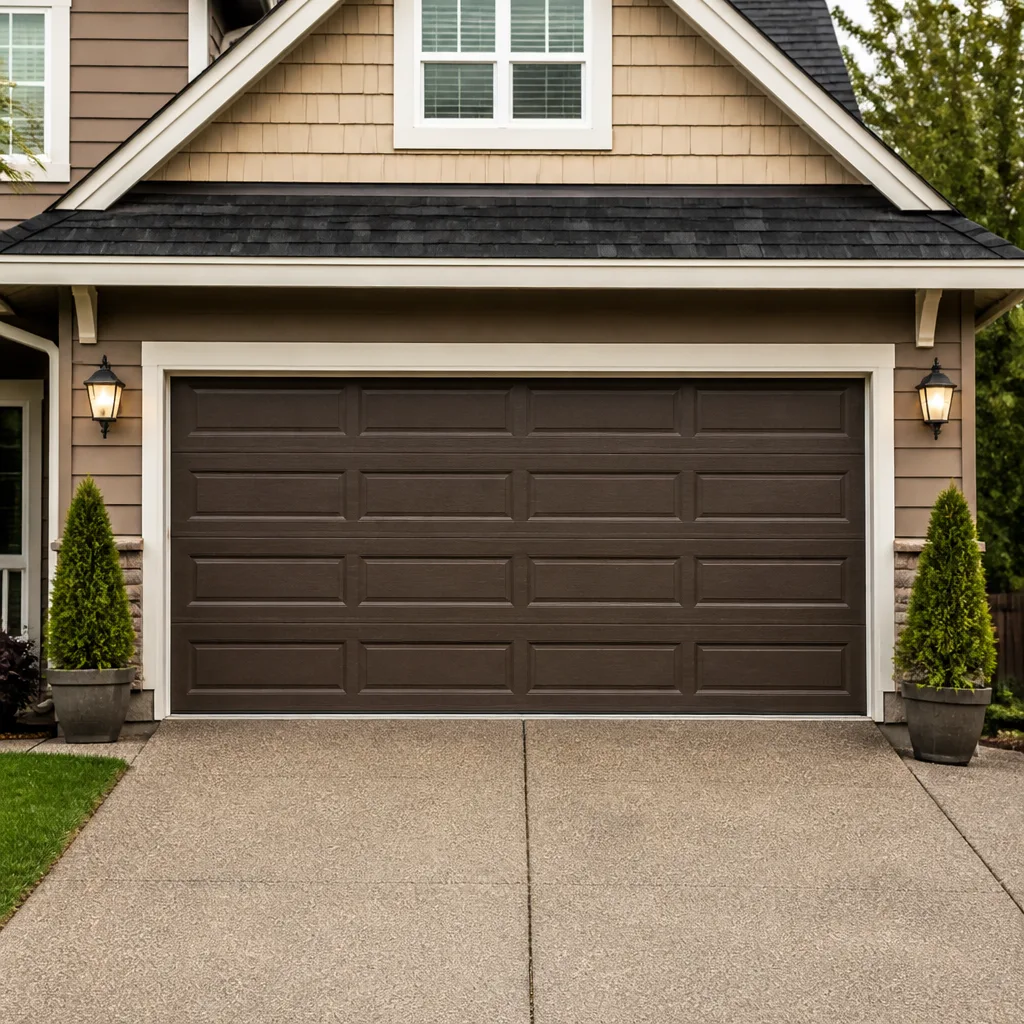 Raised-panel steel
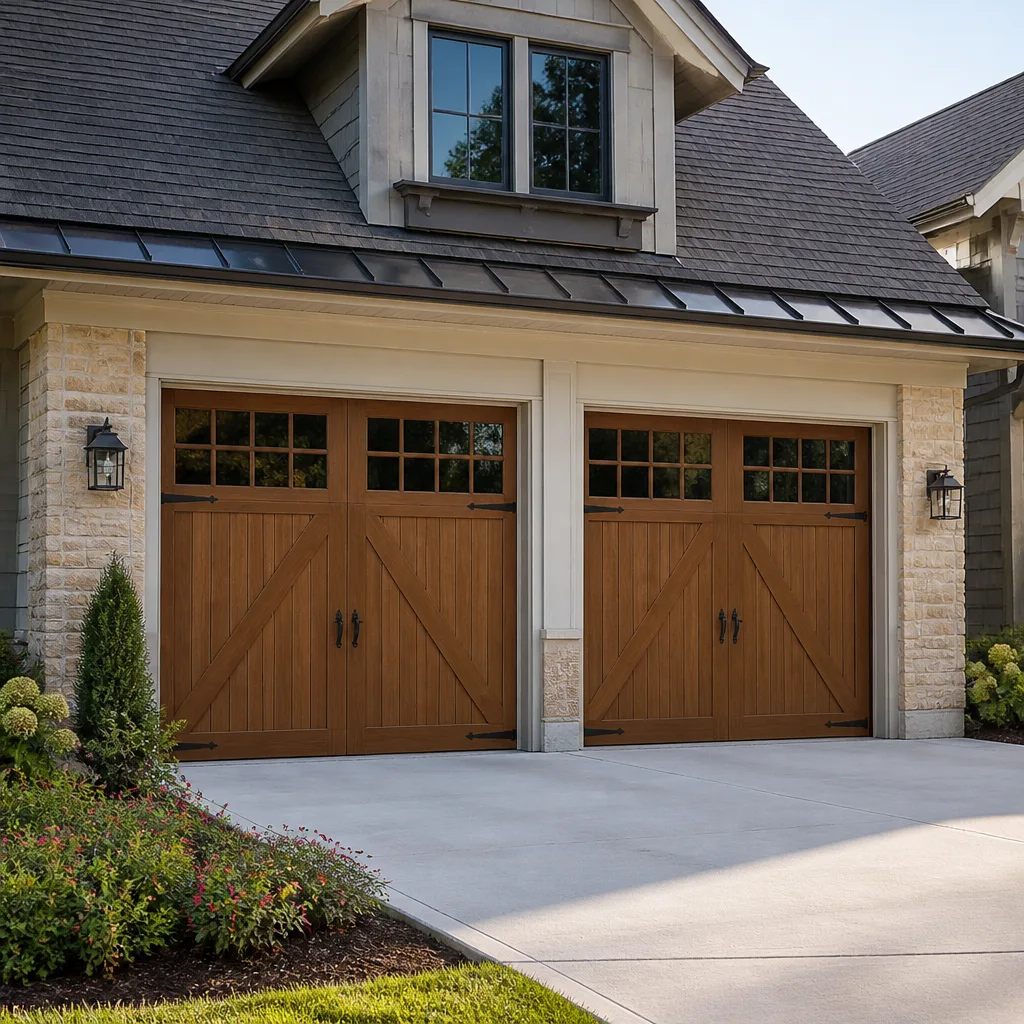 Carriage house
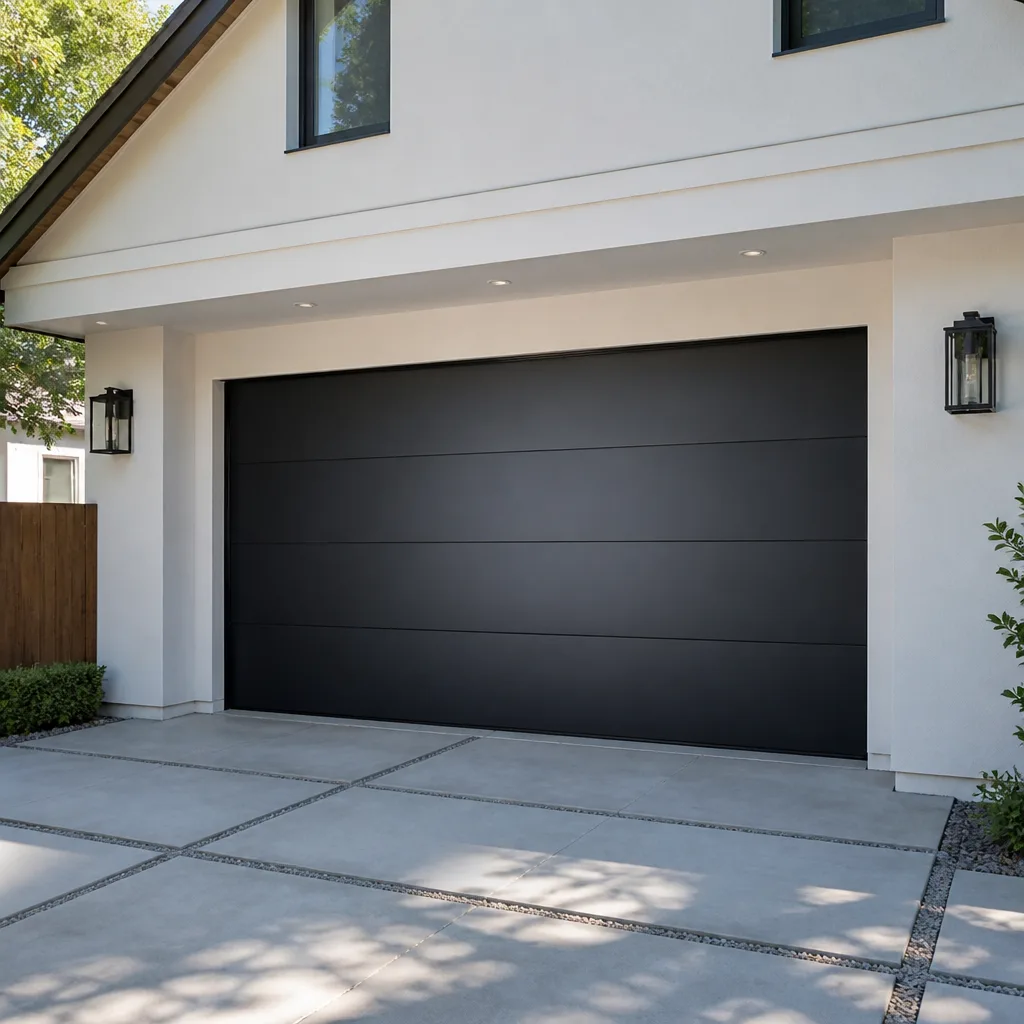 Modern flush
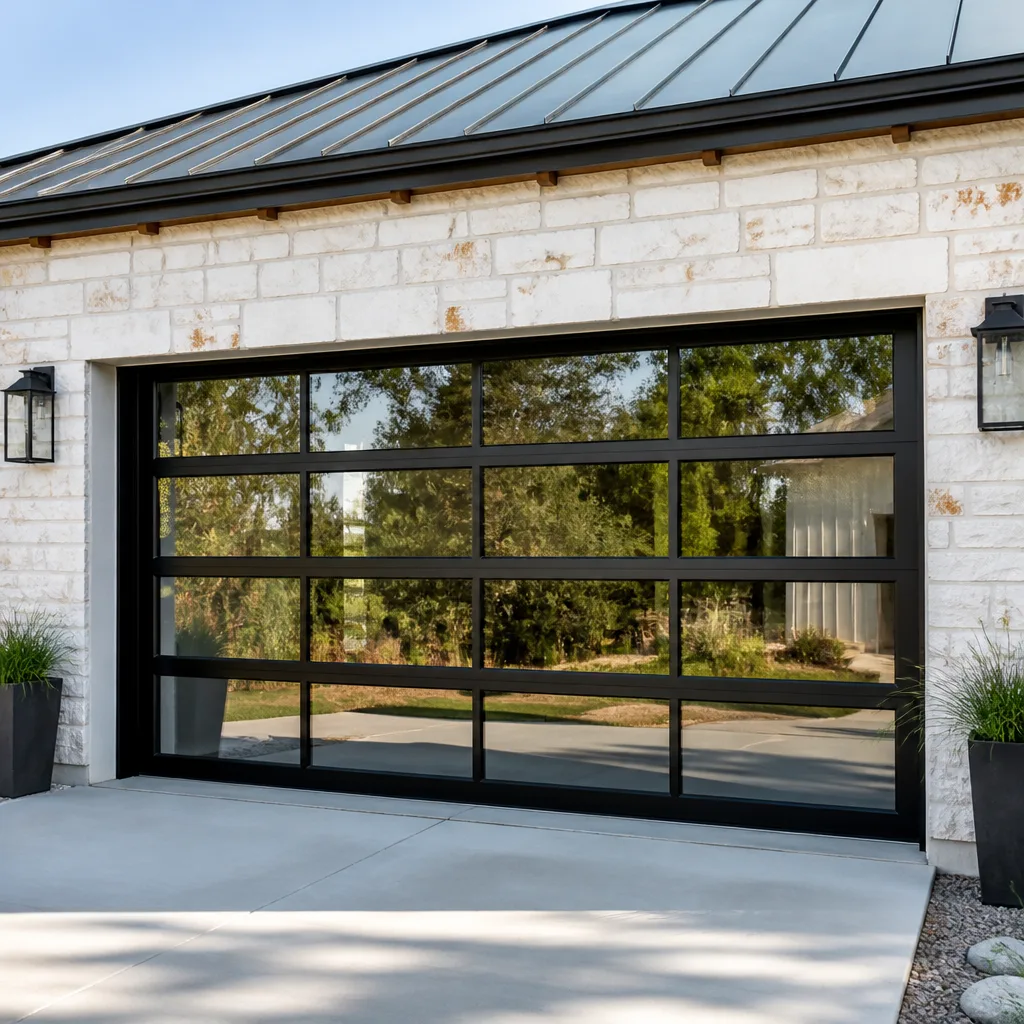 Full-view glass
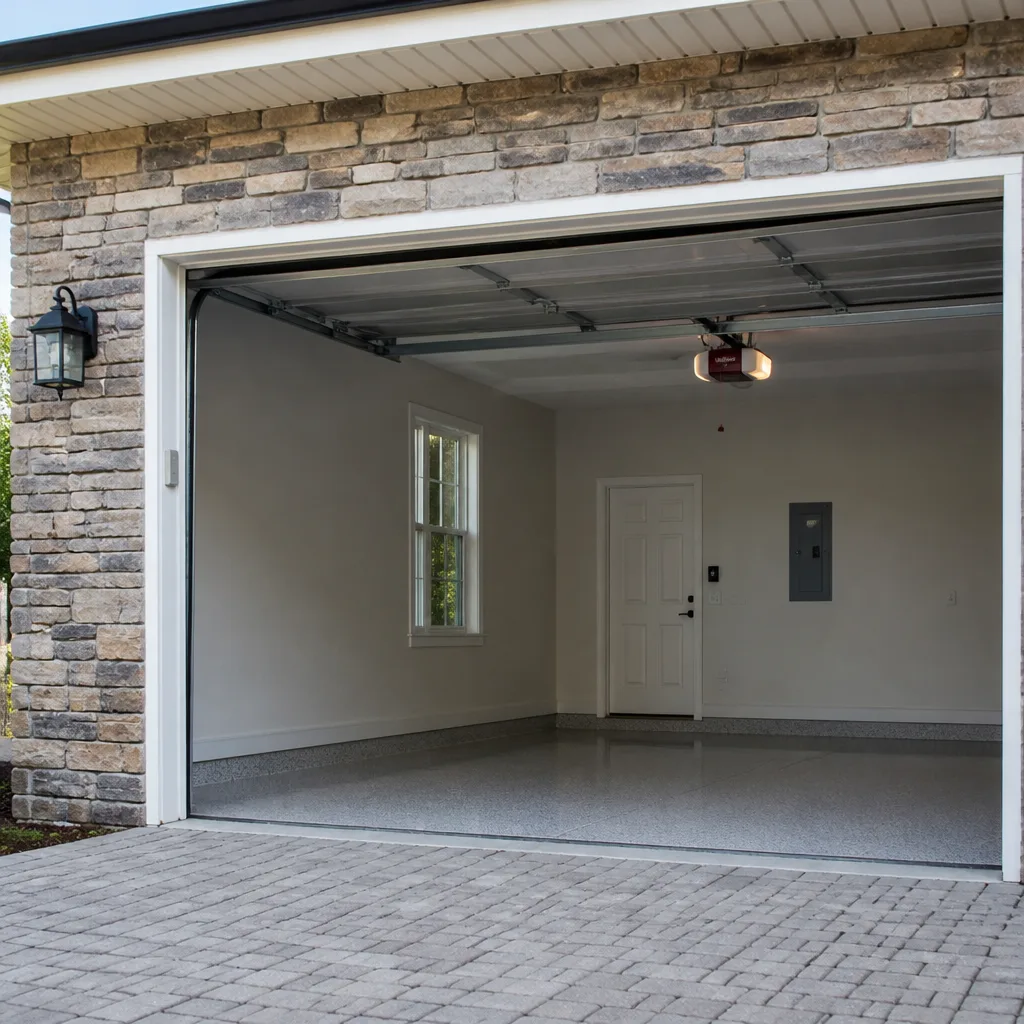 LiftMaster openers
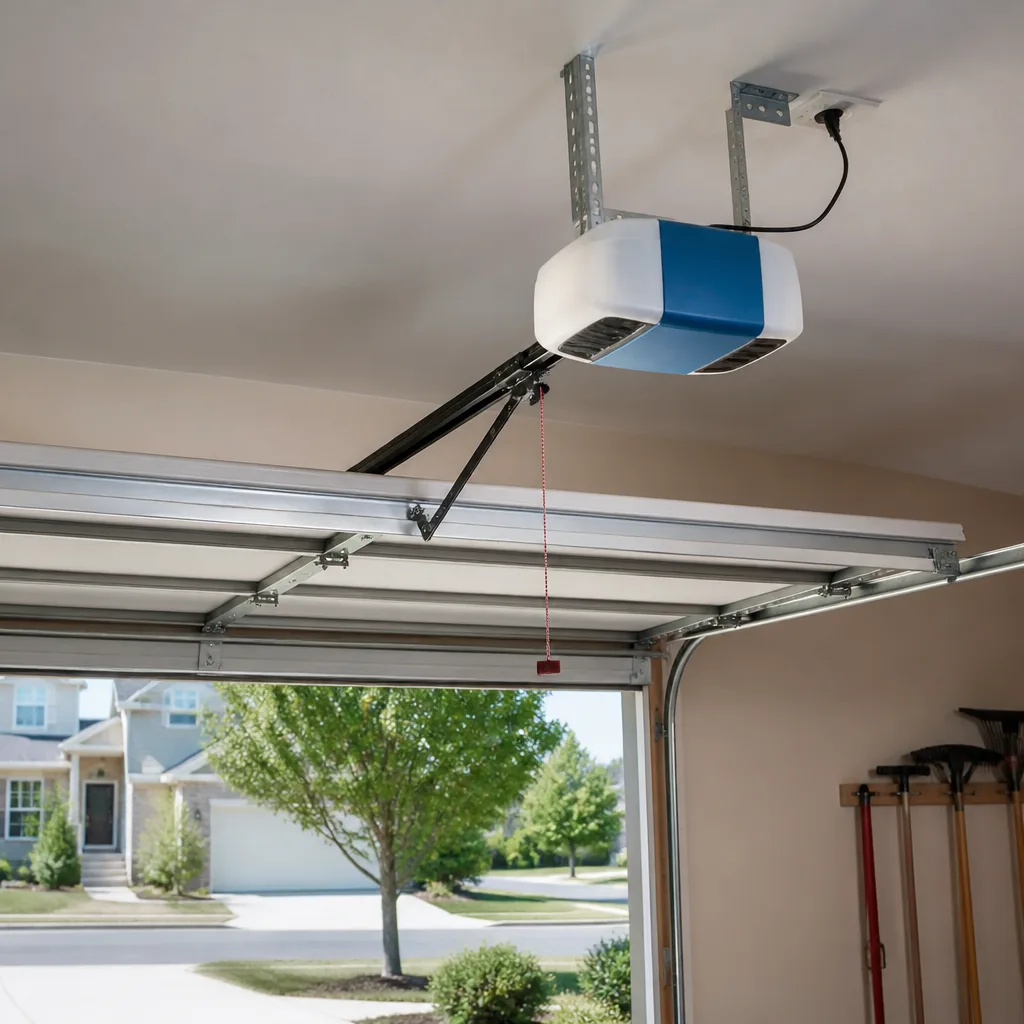 Chamberlain openers
Full 25-point door and opener safety check with every visit - springs, cables, rollers, tracks, and your LiftMaster or Chamberlain opener included
You get a price before we start. It does not change when the pro arrives.
Get your free estimateThe Complete Guide to Garage Doors in Frankford
Most garage door guides are written for a three-car suburban garage in Arizona, not a 10-foot-wide opening on a Frankford street where the door clears a parked car by eight inches. That mismatch matters more than people expect. Advice about “standard” 16-foot doors, wide side rooms, and mild winters does not translate well to the row homes and semi-detached houses packed along these blocks. Frankford’s freeze-thaw swings, tight driveways, and older framing change which repairs make sense, which openers fit, and which doors survive a decade of use. This guide walks through what actually works here, from header space to spring life, so you can tell a door problem from an opener problem from a structural one before anyone touches the door.
Quick Answer
A garage door in Frankford usually fails because of freeze-thaw stress on springs and cables, worn opener components, or a misaligned track, and the right fix depends on whether the door, the opener, or the opening itself is the source. Row-home and semi-detached construction means side room and header space are often tighter than a standard door requires, so measurements come before any quote. A written estimate sets the price before work starts, and anything involving springs or cables belongs with a trained technician.
Styles & brands we work with
- Raised-panel steel
- Carriage house
- Modern flush
- Full-view glass
- LiftMaster openers
- Chamberlain openers
Table of Contents
- How Frankford’s Row Homes Change the Rules
- Why Freeze-Thaw Cycles Are the Real Enemy
- Repair or Replace: The Non-Standard Opening Problem
- Which Door Styles and Materials Hold Up Here
- Door, Opener, or Structure? A Diagnostic Walkthrough
- Choosing an Opener for a Narrow Bay
- What Garage Door Work Costs in Frankford
- A Simple Maintenance Routine for Local Conditions
How Frankford’s Row Homes Change the Rules
Frankford’s housing stock was built for a different era of transportation. Driveways are narrow, openings run smaller than the 16-foot double doors most national guides assume, and the garage often shares a wall with the house or a neighbor. That single fact reshapes almost every decision about a door. On a semi-detached home, the shared wall limits how much you can anchor into it, and the opening’s header space above the door may be shallower than a modern torsion system or a low-headroom opener needs.
Side room, the clearance between the door’s edge and the wall, is the other constraint that catches people out. A standard extension spring setup needs a certain amount of space on each side; a torsion setup needs room above. In a Frankford row home, one of those is often tight, and the fix is not always obvious. Sometimes it means switching spring type. Sometimes it means a different opener mount. Sometimes it means a custom-width door rather than an off-the-shelf box store unit that will not fit the frame without modification.
Here is what we check first on any Frankford garage, before quoting anything:
- Measure the actual opening, not the door. Older frames are rarely square, and a door that “should” fit often needs a custom size.
- Check headroom above the opening for torsion springs and opener rail clearance.
- Check side room on both sides for spring and track clearance.
- Inspect the header and jambs for sagging, rot, or movement that would throw off any new door.
- Confirm whether the wall is shared, which affects how tracks and openers can be anchored.
Doing this before a quote avoids the worst outcome in this trade: a door ordered in a standard size that doesn’t fit an opening that never was standard. For repair work rather than replacement, a technician who has measured the opening can usually restore function without changing dimensions. For a fresh install, our garage door installation service starts with the tape measure, not the catalog.
Why Freeze-Thaw Cycles Are the Real Enemy
Cold alone does not break garage doors. What breaks them is the repeated swing between freezing nights and thawing days that defines a Philadelphia-area winter. Metal contracts at night and expands by afternoon. Springs endure thousands of those small expansions and contractions across a season, and each one is a stress cycle. Cables stretch and relax in step. Bottom seals harden, then soften, then crack at the folds. By spring, a door that seemed fine in October may be running on fatigued steel.
This is why a Frankford garage door can fail on a mild day in March rather than the coldest night in January. The damage accumulated over the winter, and the door gives out once the load shifts. The same cycle attacks the bottom seal, letting in meltwater that refreezes along the threshold and stresses the bottom panel. It also works on the track, where contraction can knock a roller out of alignment just enough to cause a binding door.
What this means for you:
- Springs are the highest-wear part in this climate. Their lifespan is measured in cycles, not years, and freeze-thaw seasons use up cycles quickly.
- Cables fray and stretch. A cable that looks fine can be a few strands from failing, which is why we inspect rather than eyeball.
- Bottom seals crack at the hinge points and let in water. Replacing a seal is inexpensive; replacing a rotted bottom section is not.
- Track alignment drifts with the temperature. A door that binds in cold weather and frees up in the afternoon is telling you something.
If your door started acting up during or right after a cold snap, treat it as weather-related wear until proven otherwise. For springs and cables specifically, keep reading, because the safety side matters here.
Repair or Replace: The Non-Standard Opening Problem
In most of the country, repair-versus-replace is a question of door age and cost. In Frankford, it’s also a question of whether the opening is standard. A door on an older row home may be a size nobody stocks, which makes full replacement slower and more expensive than a strategic repair. The good news: most functional problems on a non-standard door can be fixed without touching the opening dimensions.
Strategic repair usually wins when the door structure is sound. That means no rot in the bottom section, no bent panels, and a frame that hasn’t shifted. On that kind of door, replacing springs, cables, rollers, and hinges restores full function at a fraction of the cost of a new door, and it keeps the opening’s original fit. Full replacement starts to make sense when the door is physically failing: rusted-through panels, broken welds, or a frame that has settled so far that the door no longer seals.
Use this as a working rule:
- If the door runs, the frame is square, and only the hardware has failed, repair it.
- If the bottom panel is rotted or the panels are bent, price a replacement.
- If the opening is out of square or the header is sagging, get the structure addressed before buying any door.
- If the door is non-standard size and physically sound, a repair protects you from a custom-order lead time.
- If the door is non-standard and failing, budget for a custom build rather than a big-box unit that won’t fit.
One more Frankford-specific note: on a semi-detached home, replacing the door without checking the shared wall’s condition is a shortcut you’ll pay for later. Anchors that hold on a freestanding garage can walk on a shared wall. If you’re weighing the options, garage door repair is usually the place to start, because a technician can tell you whether the failing part is hardware or structure before you commit to replacement.
Which Door Styles and Materials Hold Up Here
Frankford’s environment is urban, mixed, and humid in summer. That combination punishes certain door materials faster than others. Steel doors dominate the market and they hold up reasonably well, but the gauge matters: a thicker steel door resists dents from a bumped car on a narrow driveway, and Frankford driveways are narrow. A thin-gauge steel door in a tight bay will dent and stay dented.
Insulation is worth thinking about even on a detached garage. An insulated door is heavier, which changes the spring and opener requirements, but it also handles humidity swings better and reduces condensation inside the garage bay. In a city where the garage doubles as storage, that matters. Wood doors look right on a lot of older Frankford homes, but they demand annual sealing against moisture, and the local humidity makes skipping that expensive. Aluminum doors resist rust but dent easily. Composite and vinyl options sidestep rust but can fade unevenly in strong sun.
What we see hold up in Frankford:
- Insulated steel in a mid-to-heavy gauge, which takes a bump without a permanent dent and handles humidity swings.
- Powder-coated or factory-finished steel, which resists fading and peeling better than field-painted panels.
- Sealed wood only if you’re willing to reseal it on a schedule; this is a style choice, not a low-maintenance one.
- Aluminum or composite where rust is the primary worry and the bay is out of the way of traffic.
On driveways tight enough to clip a mirror, we lean toward heavier steel with a proper bottom seal. The door takes a knock and keeps working. That is more useful in Frankford than a lighter door that looks good for two years and dents the first time a car rolls in crooked.
Door, Opener, or Structure? A Diagnostic Walkthrough
Before you call anyone, you can narrow down where the problem actually lives. Most “my garage door is broken” calls come down to one of three systems, and knowing which one saves time and money. The door itself (panels, rollers, hinges, springs, cables); the opener (motor, logic board, safety sensors, remote); or the structure (track alignment, frame, header, or floor). Each fails in a different way.
Run through this before calling:
- Operate the door manually if the opener allows it. If it moves freely by hand, the door system is likely fine and the trouble is the opener. If it’s stiff or won’t budge, the door hardware or structure is involved.
- Listen for the opener motor. A running motor with no movement points to a stripped gear or a disconnected drive. A dead motor points to power, logic board, or capacitor.
- Check the safety sensors at the floor on each side. Dirty or misaligned sensors stop the door from closing and produce a symptom that looks like a failing opener.
- Look at the tracks. Dents, gaps, or a track that’s no longer plumb tell you the door is binding, which is a structural or hardware issue, not an opener issue.
- Check the springs and cables with your eyes only. A gap in a torsion spring coil or a visibly frayed cable means the door should not be operated until a technician sees it.
If the door runs smoothly by hand but not with the remote, you have an opener problem, and that’s the easier call. We handle garage door opener repair on LiftMaster, Chamberlain, Craftsman, and Raynor units, among others, and diagnostic work on the opener side is usually quick. If the door binds by hand, stop operating it: that’s where broken springs, bent tracks, and structural issues live, and running the door makes them worse.
Choosing an Opener for a Narrow Bay
Opener choice in Frankford is driven by the same tight-space problem as the door itself. A standard rail-and-trolley opener needs headroom in the middle of the bay, and a low-headroom row-home garage often doesn’t have it. When that happens, the options narrow: a low-clearance rail system, a wall-mounted jackshaft opener that mounts beside the torsion bar rather than above the door, or, in the tightest bays, a side-mount setup that frees the whole ceiling.
Brand matters less than fit, but it does matter for parts. We work on the models you actually own, which is why brand compatibility gets checked first. LiftMaster and Chamberlain units share much of their internal design and are common in this region, so parts and repairs are straightforward. Craftsman openers appear on a lot of older homes and are still serviceable. Raynor commercial-style units show up on some semi-detached setups. We’re trained on these and on Genie, Clopay, Amarr, and Wayne Dalton, so we’re diagnosing the model in front of us, not a generic approximation.
What to weigh when replacing an opener in a narrow Frankford bay:
- Headroom, measured from the top of the door to the ceiling, decides whether a rail opener fits at all.
- Side room decides whether a jackshaft or side-mount unit is possible.
- Door weight, which rises with insulated doors, must sit inside the opener’s rating.
- Safety sensors are required on modern openers and must be mounted where they won’t be knocked by a car or stored junk.
- Battery backup is worth having where power outages take the door down with them.
A quiet belt drive makes sense on a semi-detached home where the garage shares a wall with a living space. A chain drive is louder but costs less to repair. In a row home, the belt-drive premium is often worth it for the peace, especially if a bedroom sits on the other side of the wall. What we don’t do is squeeze a full-size rail opener into a bay it doesn’t fit and hope for the best; mismatched openers strain the door and shorten the life of everything attached to it.
What Garage Door Work Costs in Frankford
Garage door pricing in Frankford tracks the Philadelphia market, with a bump for non-standard openings and shared-wall work. These are typical ranges for planning, not exact quotes. Every job gets a written estimate, and that written estimate is the price you pay. Nothing gets added after the work begins.
| Job | Typical Estimated Range |
|---|---|
| Torsion spring replacement (one spring) | $180 – $340 |
| Matched spring pair (both replaced together) | About twice the single-spring range |
| Cable replacement | $150 – $300 |
| Roller, hinge, and track alignment service | $120 – $280 |
| Opener repair (motor, logic board, sensors) | $150 – $400 |
| Opener replacement (unit and install) | $350 – $750 |
| New door install, standard size | $900 – $2,400 |
| New door install, custom size for a row-home opening | Quoted per opening after measure |
Custom openings are quoted rather than ranged, because a row-home bay can be a few inches off standard in either direction, and custom orders cost differently depending on panel and width. Springs are quoted per spring for a reason: a matched pair costs about twice a single spring, and most doors use a pair. If a tech tells you one price covers both, ask which spring it is. On nearly every door worth fixing, both go together.
The question we get most after the price itself is whether the number will hold once the tech is on site. It does. The estimate is written and agreed before any work starts. If we find a second issue, you get a second written estimate before we touch it. That is the whole arrangement. Call (855) 337-1053 for an exact quote; estimates are free.
A Simple Maintenance Routine for Local Conditions
A garage door in Frankford needs less maintenance than the scare articles suggest, but it needs it consistent. The freeze-thaw cycle, dust from on-street parking, and summer humidity are the three pressures on the door, and each responds to a quick check. Ten minutes a few times a year is enough to catch wear before it turns into a broken spring on a Sunday.
What we recommend, in order of importance:
- Lubricate the rollers, hinges, and tracks with a proper garage door lubricant, not grease, a few times a year. Dust from on-street parking turns grease into grit.
- Test the door balance by hand once a season: lift halfway and let go. A door that won’t hold position means the springs are losing tension.
- Check the bottom seal for cracks at the folds, especially after a hard winter. A cracked seal lets in water that freezes at the threshold.
- Look at cable and spring condition with the door closed, from the floor, without touching. Frayed cables or gaps in spring coils mean it’s time for a professional.
- Clear the tracks of debris and check that they’re plumb with a straight edge.
- Test the safety reversal by placing a block under the door and confirming it reverses on contact.
What you should not do yourself is adjust or replace springs or cables. Those parts are under high tension and store enough force to cause serious injury if released uncontrolled. A torsion spring can take a finger or worse in a fraction of a second. This is a trained-professional job, not because the work is complicated to describe, but because the failure mode is severe. Even a door that “just needs a little adjustment” on the spring side goes to a technician.
Common Mistakes to Avoid
- Buying a standard door before measuring the opening. Frankford row homes often have non-standard widths, and a box store door that “should fit” frequently doesn’t. Measure first, order second.
- Replacing one spring of a pair. If one is fatigued, the other has lived the same thousands of cycles. Replacing one leaves you doing the job again in weeks, and the pair should be replaced together.
- Forcing a binding door with the opener. A door that binds by hand is on a failing spring, cable, or track. Running the opener against it strips the drive gear and can snap a cable.
- Using grease on the tracks. Grease collects the dust from Frankford’s on-street parking and turns tracks into a grinding mess. Use a dry or proper door lubricant, sparingly.
- Assuming cold broke it. A break in March or on a mild day is usually the accumulated effect of a winter of freeze-thaw cycles, not a single cold night. Look for wear across the whole system.
- Mounting a full-size rail opener in a low-headroom bay. A cramped opener strains the door and shortens the life of the whole system. If headroom is tight, the answer is a different style of opener, not a squeezed one.
- Treating a shared-wall semi-detached garage like a freestanding one. Anchoring decisions differ. What holds on a freestanding wall can walk on a shared one.
See the difference
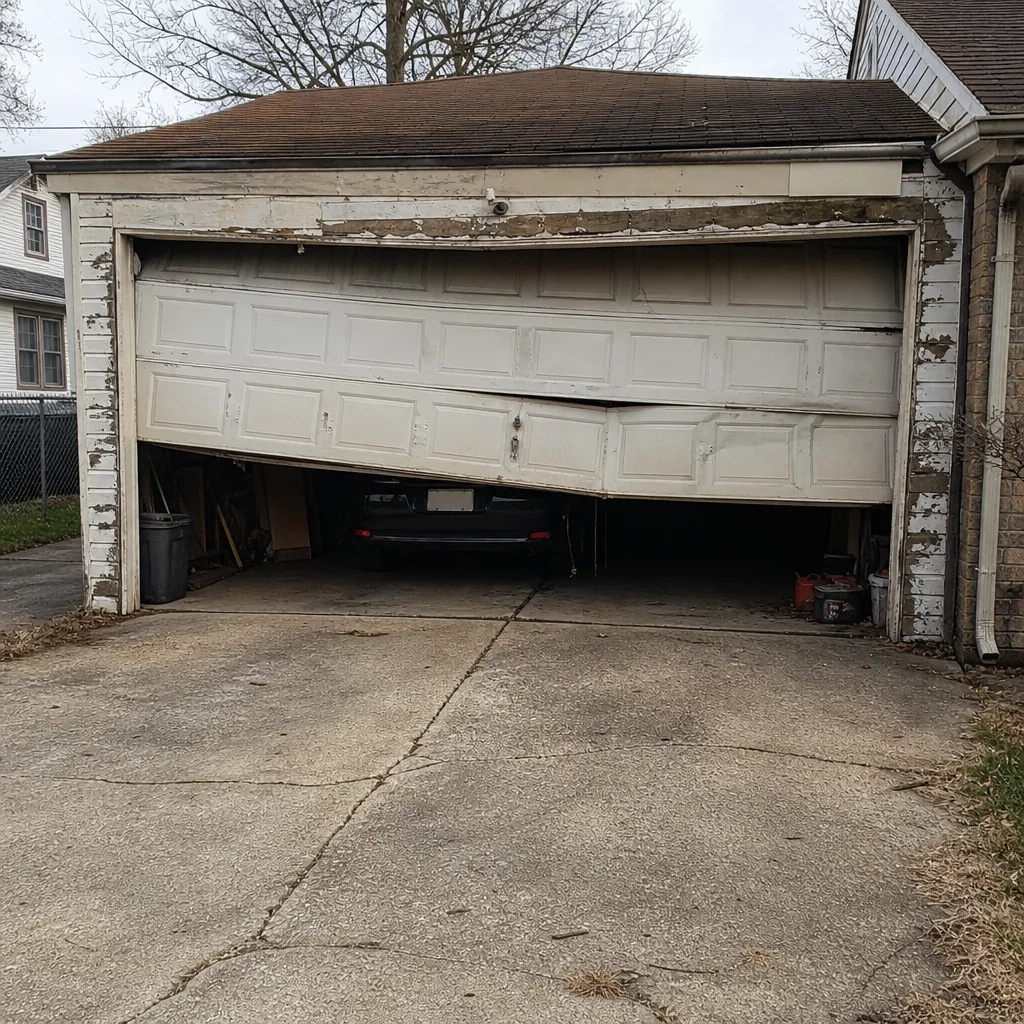 Before
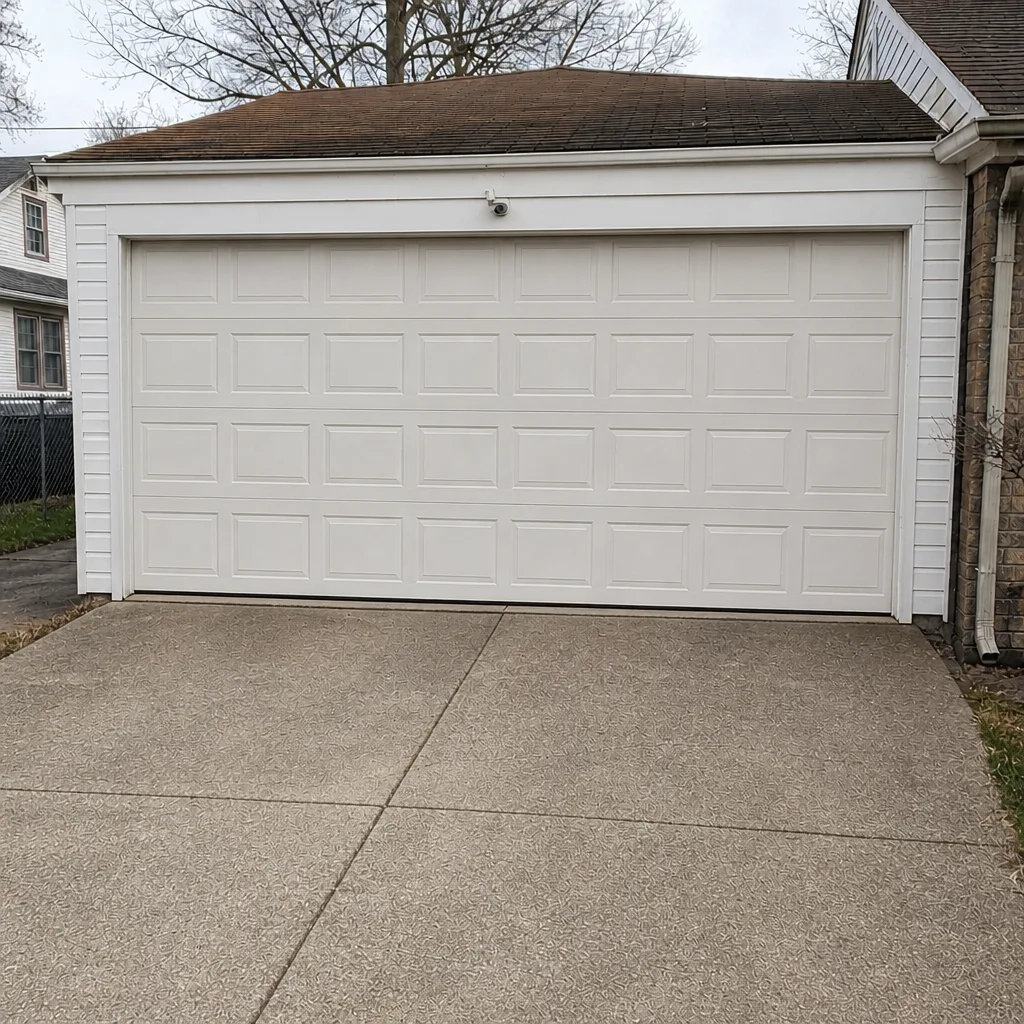 After
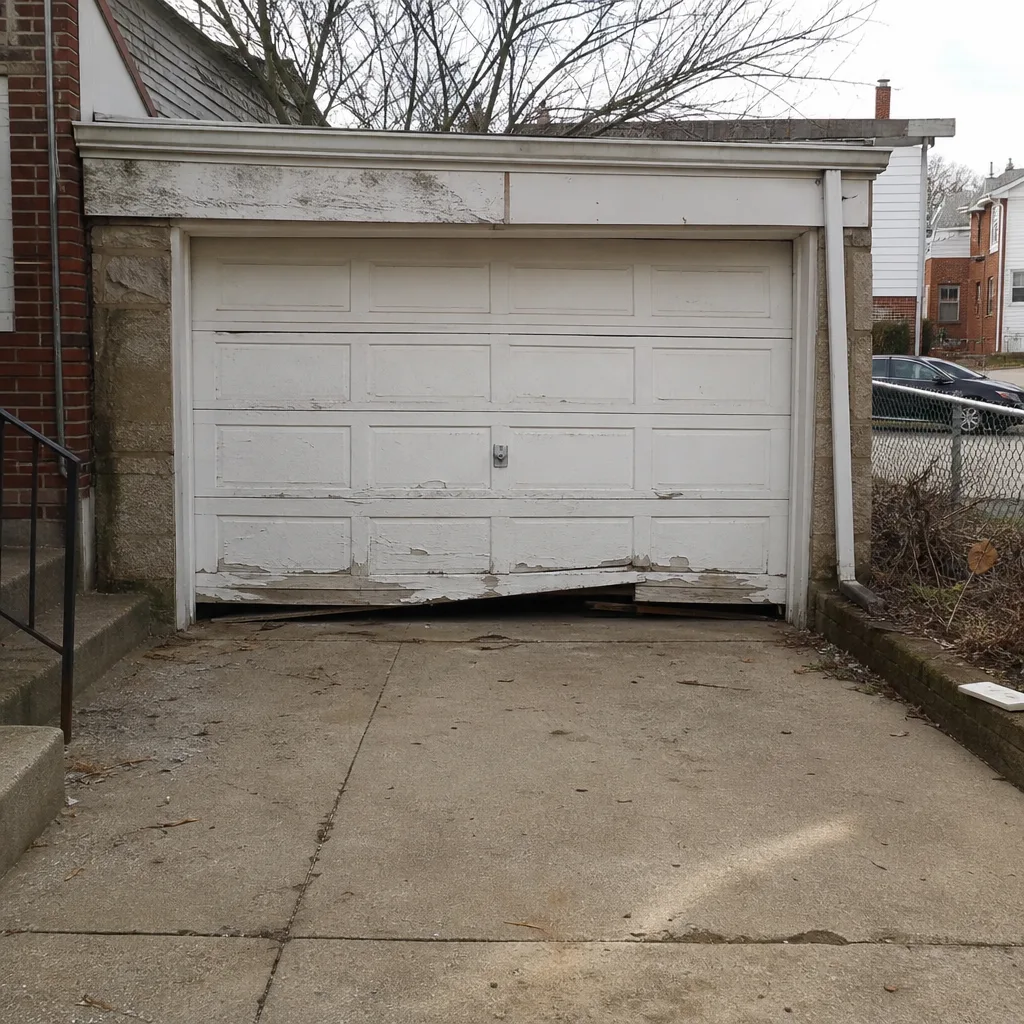 Before
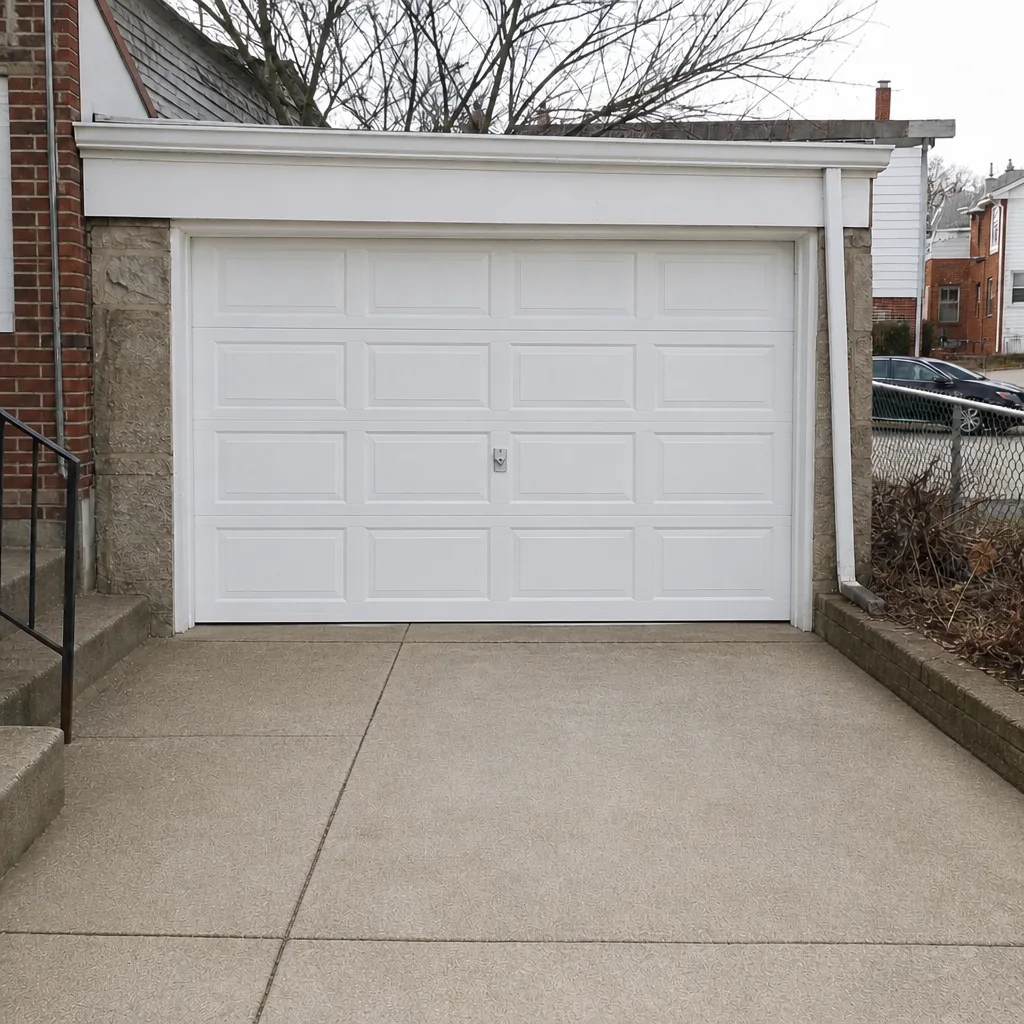 After
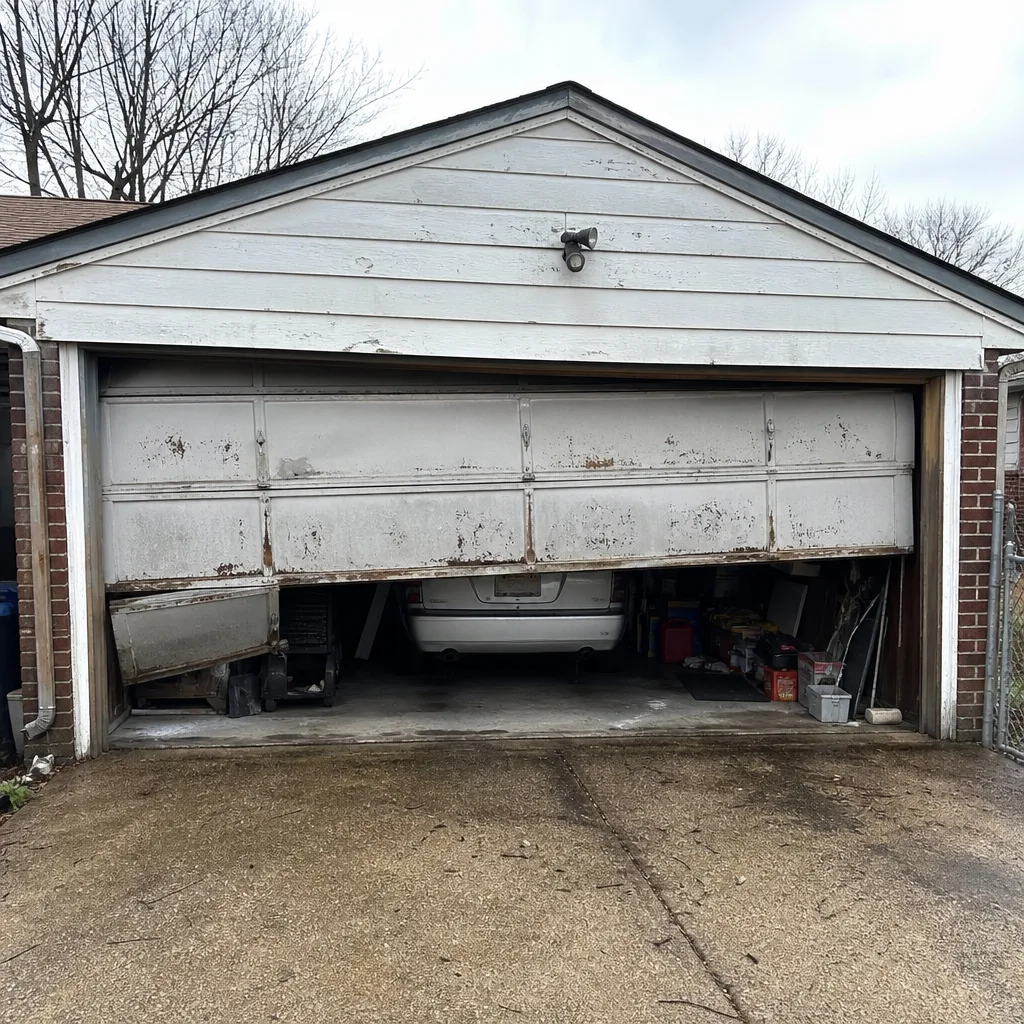 Before
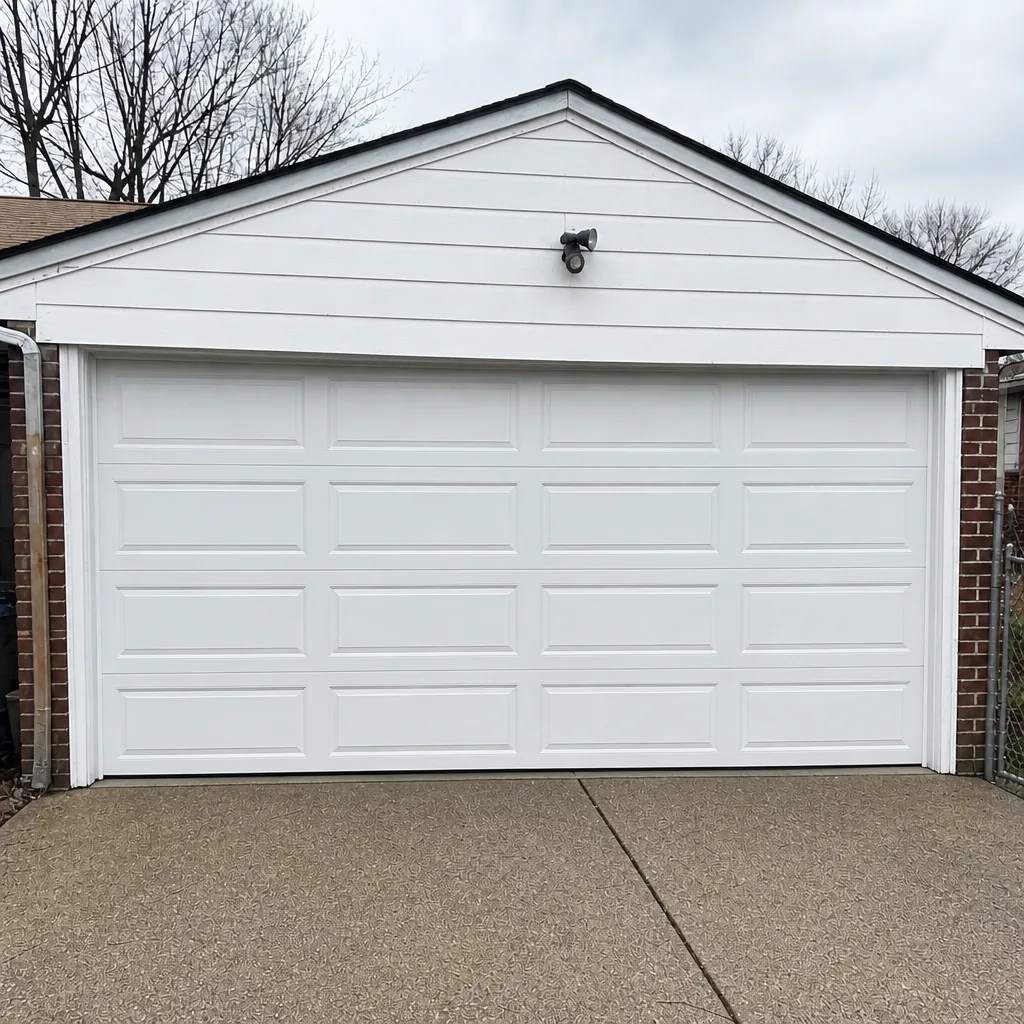 After
When to Call a Professional
Call a professional if the door won’t open or close all the way, if it binds when you move it by hand, if you can see a gap in a torsion spring coil or a frayed cable, or if the opener runs but the door doesn’t. Call if the door reverses unexpectedly on its own, if the tracks are bent or pulled loose, or if the frame around the opening shows movement. Those are all signs that either the hardware or the structure needs a trained eye, and spring or cable trouble is a hands-off situation. Garage Door Repair Frankford offers free estimates in Frankford. Call (855) 337-1053. We answer 24/7, with fast dispatch from 7am to 7pm, Sunday through Friday.
Frequently Asked Questions
Torsion spring replacement in Frankford typically runs $180 to $340 for one spring, with a matched pair about twice that. Most doors use a pair, and both are usually replaced together, so budget for the pair rather than the single. The written estimate sets the price before work starts. Call (855) 337-1053 for an exact quote; estimates are free.
Yes, for repair and emergency calls. Emergency garage door service is a core part of what we do, and same-day repair is often possible. We answer 24/7, and fast dispatch runs from 7am to 7pm, Sunday through Friday. A call outside dispatch hours is booked into the next opening. Call (855) 337-1053. Estimates are free.
No. The price is quoted and agreed before any work starts, and the written estimate is what you pay. If we find a separate issue while working, you get a second written estimate before we touch it. Nothing gets added afterward. Call (855) 337-1053 for a free estimate.
The local pro we connect you with is licensed and insured as their state requires. Our technicians have up to 12 years of experience on doors and openers, and every job on this trade gets the same attention, from a spring repair to a full install. Call (855) 337-1053 with any questions before booking.
Yes. A torsion spring stores enough energy to cause serious injury if it fails or releases uncontrolled, so do not operate the door or try to adjust it yourself. Keep the door closed and call a technician. This is one of the repairs we handle directly, not a job for a generalist. Call (855) 337-1053 to get it sorted.
Repair is usually the right call if the frame is square and the door is physically sound, since a Frankford row-home opening is often non-standard and a repair keeps the original fit. Replacement makes sense when the bottom panel is rotted, panels are bent, or the frame has settled. A written estimate on both options settles it. Call (855) 337-1053 for a free measure.
The Bottom Line
Garage doors in Frankford need Frankford answers. Tight bays and narrow driveways mean measuring before buying, non-standard openings mean repair often beats replacement, and the freeze-thaw cycle means springs and seals wear out faster here than the national guides suggest. Diagnose the source first, door or opener or structure, and treat springs and cables as hands-off. A written estimate before work protects you from a surprise on the invoice. If the door is giving you trouble, or if you’re planning a new one for a row-home opening, we’re glad to help. Call (855) 337-1053. We answer 24/7, with fast dispatch from 7am to 7pm, Sunday through Friday.
For the full range of what we do, start with Garage Door Repair Frankford.
Written by the team at Garage Door Repair Frankford.