
Last updated November 21, 2026
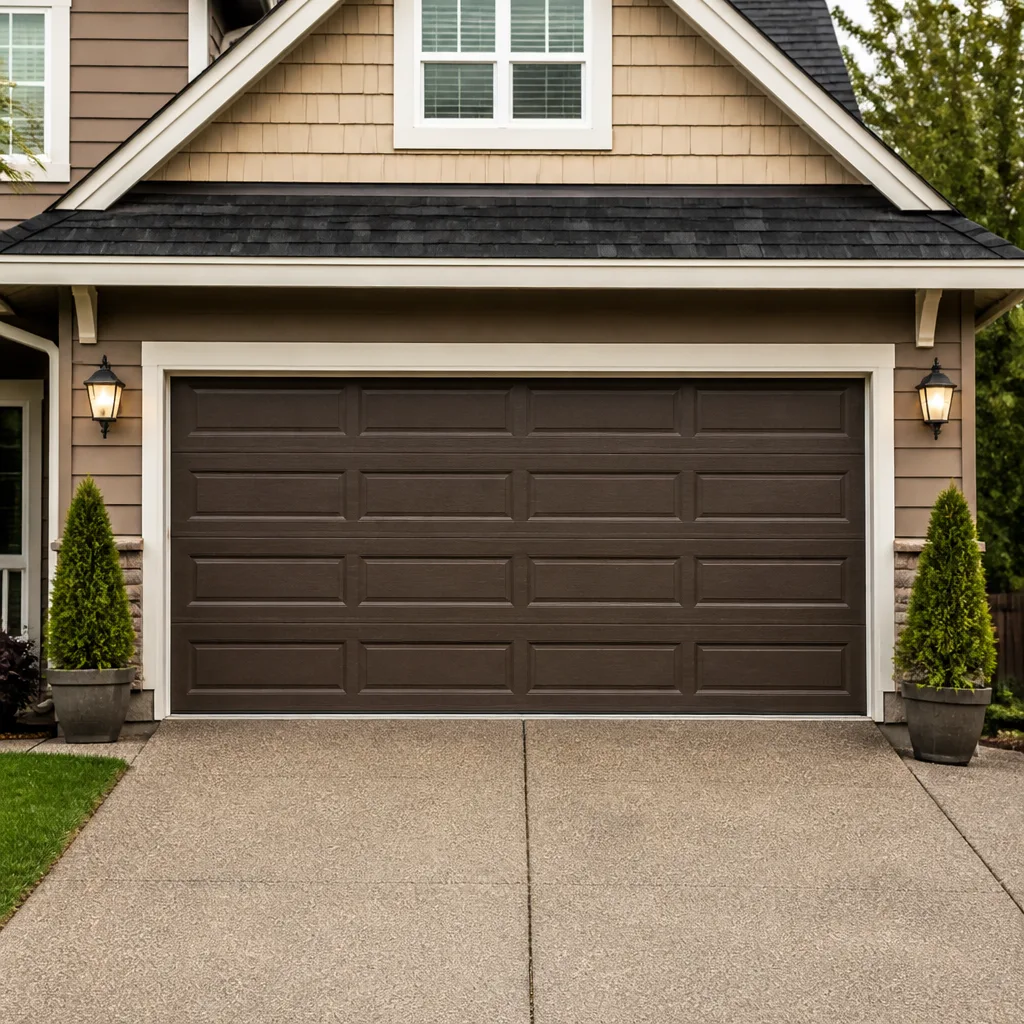 Raised-panel steel
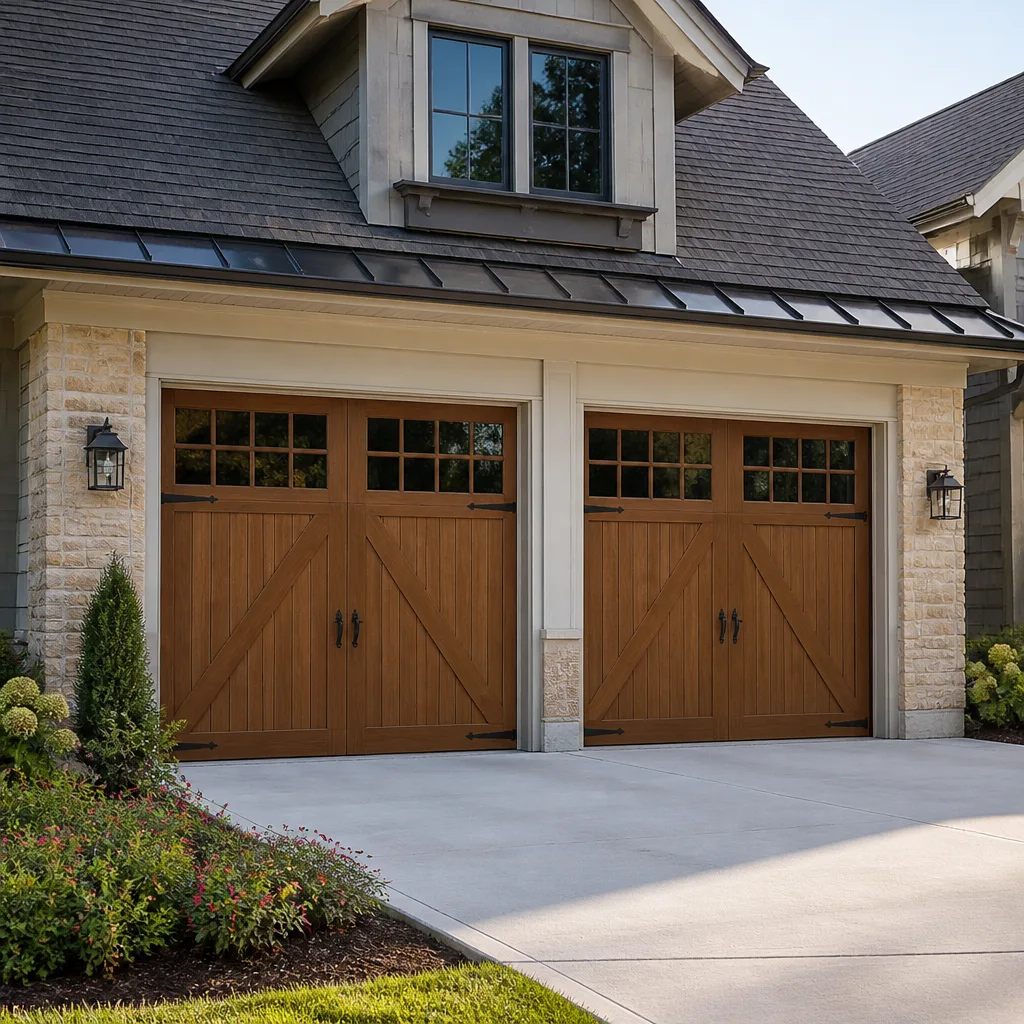 Carriage house
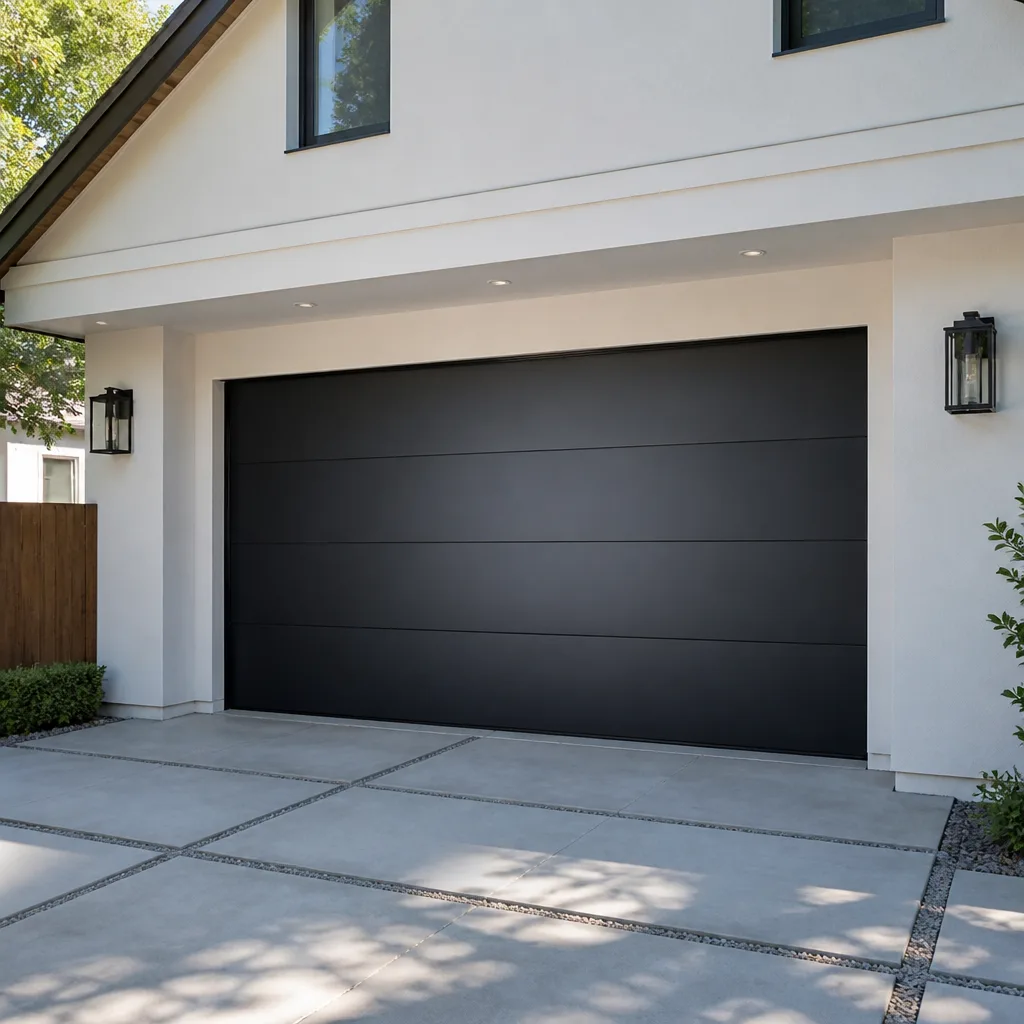 Modern flush
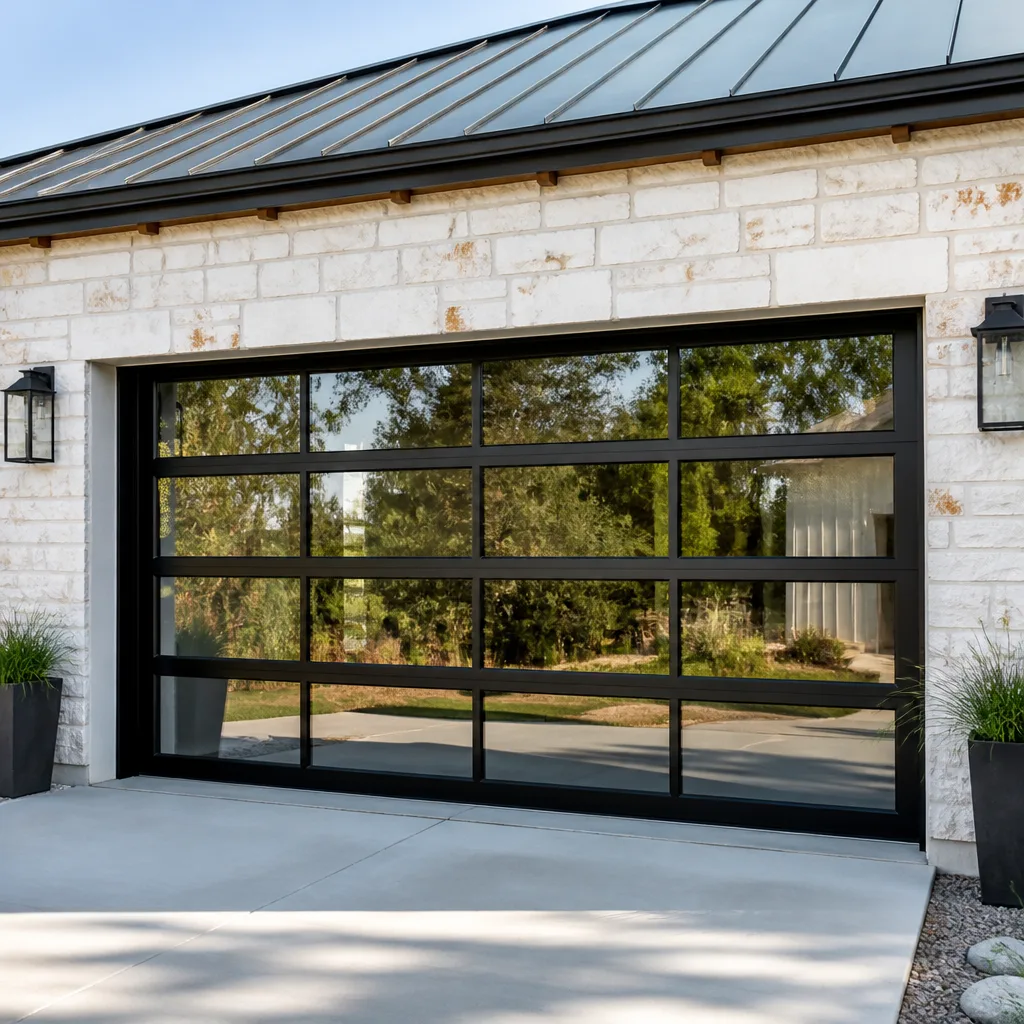 Full-view glass
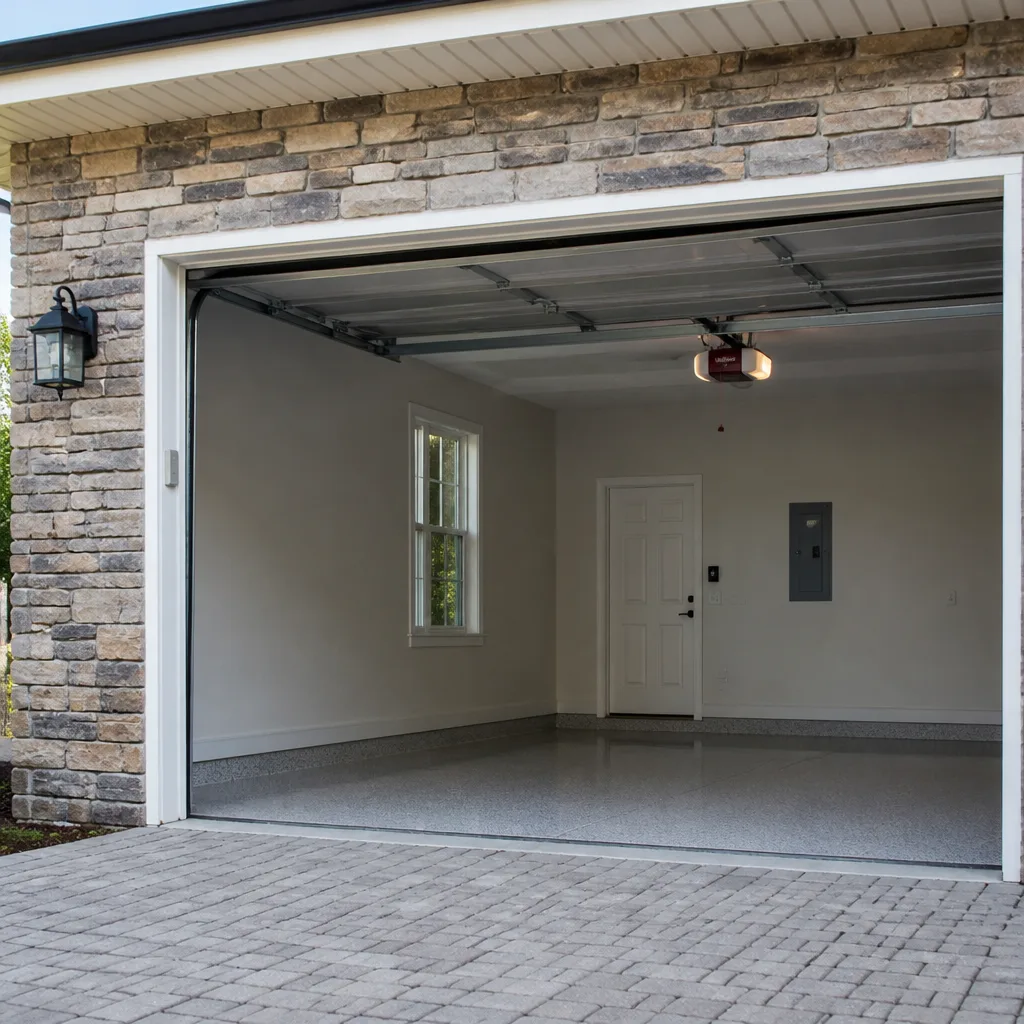 LiftMaster openers
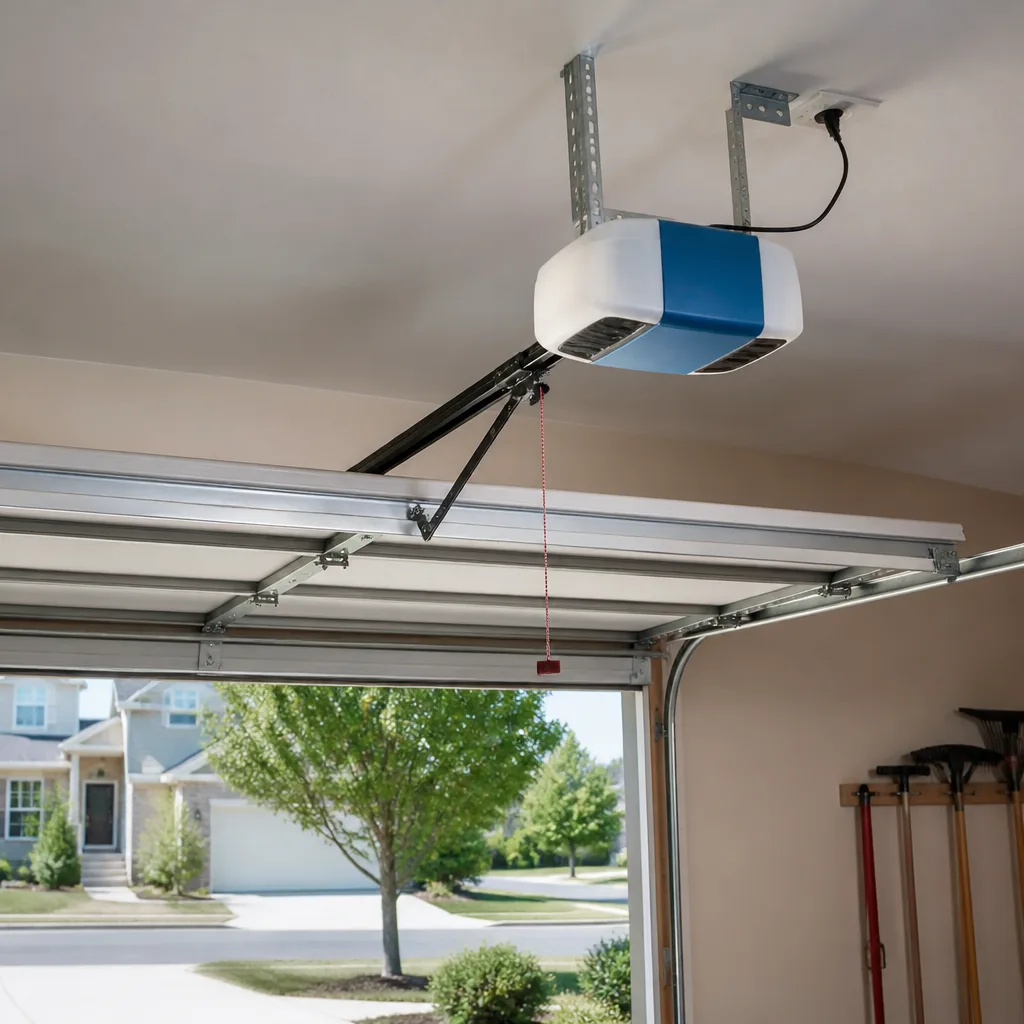 Chamberlain openers
Full 25-point door and opener safety check with every visit - springs, cables, rollers, tracks, and your LiftMaster or Chamberlain opener included
You get a price before we start. It does not change when the pro arrives.
Get your free estimateDIY vs Professional Garage Door: The Frankford Homeowner’s Decision Guide
A torsion spring stores roughly 100 foot-pounds of torque. It does not care how handy you are. That’s the part most DIY-versus-pro debates miss. People frame garage door work as a skills question, then argue about whether a homeowner with a decent tool collection can handle it. But the real line isn’t drawn by skill. It’s drawn by physics. Some garage door tasks are genuinely reasonable for a careful Frankford homeowner. Others sit in a completely different safety category, one where a mistake doesn’t cost you a Saturday afternoon, it costs you fingers. This guide draws that line precisely, task by task, so you know exactly where your competence stops mattering and why.
Quick Answer
Cosmetic and low-tension jobs, like lubricating hinges and rollers, tightening loose bolts, replacing weather seals, and adjusting photo-eye sensors, are genuinely safe for most Frankford homeowners to handle. Anything involving torsion springs, extension springs, cables, bottom brackets, or the door’s counterbalance system requires a trained professional, regardless of skill level, because those parts are under extreme tension that can release with lethal force. Opener replacement and full door installation are smart professional jobs for most homes, and often structurally impractical for DIY.
Styles & brands we work with
- Raised-panel steel
- Carriage house
- Modern flush
- Full-view glass
- LiftMaster openers
- Chamberlain openers
Table of Contents
- Why Springs Are a Physics Problem, Not a Skill Problem
- The Task-by-Task Breakdown: What You Can and Can’t Do
- Torsion vs. Extension Springs, Explained Plainly
- Does DIY Opener Installation Actually Save Money?
- Frankford Housing Situations Where DIY Fails
- When a Technician Quotes a Repair You Think You Can Do
- The Safety Rules Nobody Should Bend
Why Springs Are a Physics Problem, Not a Skill Problem
Here’s the concept that reframes the whole decision. Your garage door is heavy. A single-car door can weigh well over a hundred pounds, and a double-car door weighs considerably more. Springs aren’t lifting the door for you. They’re balancing it, storing the energy it takes to hoist that weight, so a human (or a small motor) only has to nudge it up and control the descent. A torsion spring does this by winding tight along a shaft above the door. An extension spring does it by stretching along a track. Both store energy the way a drawn bow stores energy. Both release that energy instantly if something slips.
That distinction is why garage door work doesn’t behave like other home repairs. When you replace a faucet or patch drywall, a mistake is inconvenient. When you work on a part that’s holding 100 foot-pounds of torque, a mistake is a physical event. The spring bar can whip, the door can slam, the cable can snap. Our technicians have up to 12 years of experience and treat spring repair as one of the most technically demanding and safety-critical tasks in the trade, not because it’s complicated to understand, but because the margin for error is measured in inches and seconds.
What “stored energy” actually means in practice
Picture a wound torsion spring. It’s holding a door that weighs as much as a person. The cables are under the same tension. Every one of those components is designed to stay under load permanently, and that load doesn’t announce itself when you look at a quiet, closed door. There’s no visual cue that tells you a spring is half-tensioned, over-tensioned, or one winding away from failure. That invisible load is what separates a plumbing repair from garage door spring work. In Frankford, where so many homes have older doors that have cycled tens of thousands of times, that tension has been quietly accumulating for years.
None of this means garage doors are unsafe to own. It means the parts holding the load deserve respect and the right hands. A trained technician knows how to release and re-set that tension safely, with the correct winding bars and the door braced. That procedural knowledge is the professional’s real value, not raw strength or a fancy toolkit.
The Task-by-Task Breakdown: What You Can and Can’t Do
This is the section you came for. Below is a clear split between what’s genuinely reasonable for a Frankford homeowner and what belongs to a professional no matter how confident you feel. We’ve drawn this line based on the physics, not on trying to sell you a repair.
Safe and reasonable for a careful homeowner
- Lubricating hinges, rollers, and tracks with a proper garage door lubricant. This quiets a squeaky door and extends part life.
- Tightening loose bolts on hinges and brackets that have worked loose. Use hand tools and don’t over-torque.
- Replacing the bottom weather seal if it’s cracked or worn. This is a straightforward slide-out, slide-in job.
- Cleaning and aligning the photo-eye sensors that tell the opener the doorway is clear. Usually just wiping the lens and nudging a bracket.
- Wiping down tracks with a damp cloth to clear debris. Don’t use grease on the tracks; it attracts grit.
- Testing the safety reverse by placing a small object in the door’s path. This is maintenance, not repair, and you should do it routinely.
Professional only, regardless of skill level
- Any torsion spring work. Winding, unwinding, replacing, or adjusting a torsion spring.
- Any extension spring work. These carry the same stored energy in a different configuration.
- Cable replacement and adjustment. Cables are under the same tension as the springs they pair with.
- Bottom bracket and drum work. The bottom bracket is where the cable attaches, and it’s loaded.
- Track realignment that involves bending or resetting a heavily loaded track.
- Counterbalance troubleshooting when the door feels unbalanced, binds, or won’t stay put.
The pattern is simple: if a component holds the door’s weight or the spring’s tension, it’s professional territory. If it just guides, seals, or signals, you can usually handle it. When you need the loaded parts addressed, our Garage Door Repair Frankford team works on the door you already have, from LiftMaster and Chamberlain openers to Clopay and Amarr doors, so the diagnosis matches your actual equipment rather than a generic guess.
Torsion vs. Extension Springs, Explained Plainly
Homeowners often assume “spring is a spring,” and that’s where dangerous decisions start. Torsion and extension springs store the same kind of energy, but they do it in opposite motions, and each fails in its own way. Knowing which one your door uses helps you understand what’s happening when something goes wrong, even if you never touch it yourself.
Torsion springs
A torsion spring mounts horizontally above the door on a metal shaft. It does its work by twisting, winding tighter as the door closes and unwinding as it opens. Many Frankford homes with newer or heavier doors use a torsion setup, often with two springs paired side by side. The paired-spring design means when one fails, the other is under extra load and shouldn’t be trusted alone. Torsion springs tend to fail with a sharp bang. Because the spring runs along the shaft, a broken torsion spring usually drops the door partway, which is why a jammed or sagging door often points to this component.
Extension springs
An extension spring runs along each side of the door, stretching as the door closes and contracting as it opens. It’s the older, more common setup on lighter doors. Extension springs are typically paired, one per side, and they fail by snapping and whipping along the track. Many carry a safety cable threaded through the center specifically to catch a spring that breaks, but that cable only helps if it’s intact and correctly installed. A missing or rusted safety cable on an extension spring setup is one of the reasons we recommend a professional look, even if the door seems fine today.
Why the distinction matters for your decision
Both types store energy. Both require release procedures that depend on which spring type, how it’s mounted, and whether the door is up or down. A homeowner who reads a generic spring-replacement guide online may be following steps for the wrong spring type entirely. That’s not a knowledge gap you want to close through trial and error. It’s the clearest possible example of a task where the honest answer is “call someone.”
Does DIY Opener Installation Actually Save Money?
This is where a lot of competent DIYers make a reasonable-sounding calculation that doesn’t hold up. On paper, an opener looks like a straightforward swap: buy the unit, follow the instructions, save the labor. But the real cost includes several things people forget to count. Here’s how to run the math honestly, so you can decide with your eyes open rather than on instinct.
The DIY cost calculation
- Add up the specialty tools. Opener installation often requires a ladder tall enough to reach the ceiling safely, a drill with the right bits, socket wrenches, and sometimes a second person for the header bracket. If you don’t own these, factor in the purchase or rental.
- Count your actual hours. A first-time opener install runs long: removing the old unit, mounting the rail, setting the header and door brackets, wiring the safety sensors, adjusting travel limits, and testing the force settings. Give yourself a realistic block, not an optimistic one.
- Check the warranty terms before you start. Many opener manufacturers require professional installation for the warranty to remain valid. If a DIY install voids coverage on a new LiftMaster or Chamberlain unit, you’ve saved labor on the front end and lost the warranty on the back end.
- Account for the risk of a misadjusted door. An opener set to the wrong force can stress the door’s springs and hardware, which can lead to repairs that cost more than the install you were trying to avoid.
- Compare against a written estimate. Get a free written price for the install, then compare it to your total DIY cost (tools plus hours plus warranty risk). Only then is the comparison real.
In our experience, the households where DIY opener install clearly pays off are the ones that already own the tools, have a helper, and are replacing like-for-like on a standard ceiling setup. For everyone else, the savings shrink fast. If you want the comparison done for your specific door, our garage door opener repair team can give you a written price on the install so you’re comparing like for like.
Frankford Housing Situations Where DIY Fails
Even a mechanically capable homeowner can hit a wall that has nothing to do with skill. Some Frankford homes have physical characteristics that make a DIY install structurally impractical, and it’s better to know that before you buy the parts. These aren’t hypothetical obstacles; they’re everyday features of the local housing stock.
Low ceilings
Older Frankford garages, especially those attached to homes built decades ago, sometimes have ceilings low enough that a standard opener and rail don’t leave the clearance they need. A low-clearance situation may call for a different opener configuration or a different mounting approach entirely. Picking the wrong unit at the store because the box said “fits most garages” leads to a return trip and a wasted afternoon.
Narrow side room
Installation and repair both require working room beside the door and above the tracks. In a tight garage, there may be barely enough space to stand next to the track, let alone safely work around a loaded spring or maneuver a new door panel. A narrow bay isn’t a dealbreaker for a professional with the right technique, but it can make a DIY install a frustrating and sometimes unsafe squeeze.
Non-standard openings
Some Frankford homes have door openings that aren’t the standard width or height. Non-standard sizes mean a store-bought door or opener kit may not line up without modification: the header, the tracks, or the mounting points may all need adjustment. Custom sizing is a professional job by nature, and it’s often where the “I’ll just install it myself” plan quietly falls apart.
Older hardware and framing
Homes that have been through multiple door replacements over the years can have framing and brackets that have been patched, re-drilled, or worn. A new opener or door needs solid, correctly positioned mounting points. When the existing framing is questionable, a professional assesses it before installing, rather than discovering the problem mid-mount. For a full door replacement in these conditions, garage door installation involves measuring, ordering, and fitting to the actual opening, not a one-size kit.
If your Frankford garage falls into any of these categories, the free estimate is the cheapest way to find out whether DIY is even viable before you spend on parts.
When a Technician Quotes a Repair You Think You Can Do
You don’t need to feel awkward about this. A homeowner who’s handy and gets a quote for a repair they think they could handle is doing exactly what they should: asking questions. The productive version of that conversation is about understanding what the repair involves and whether it’s genuinely in DIY territory, not about arguing down a price. Here’s how to have it so you get honest information, whichever way the decision goes.
- Ask what part is being replaced and why. A good technician will point to the failed component and explain how it’s causing the symptom. If the answer is vague, press for specifics.
- Ask whether the repair involves a spring, cable, or bracket under tension. This single question tells you immediately whether the job is in the professional-only category. If it is, that answers the DIY question for you.
- Ask what happens if the repair isn’t done. Sometimes the honest answer is “the door will keep working but get noisier” and sometimes it’s “the other spring will take the full load and fail too.” The second answer saves you a much bigger problem down the line.
- Ask for the written estimate before any work begins. The price should be quoted and agreed before a wrench turns. That’s true whether you’re deciding between options or ready to book.
- If you decide to DIY a safe, low-tension task, say so. A reputable technician would rather you handle the weather seal yourself and call back for the spring than feel pushed. The right fix, not the easy fix, is what we’d want for you either way.
One more thing worth asking: whether the quote accounts for related wear. A door that’s been running on failing springs often has worn rollers or a straining opener too. Understanding the whole picture helps you judge the value of the repair honestly.
The Safety Rules Nobody Should Bend
Some garage door repairs are uncomfortable. Some are genuinely dangerous. The gap between those two is where most injuries in this trade come from, and it’s worth stating plainly. High-tension springs and the cables attached to them can release stored energy violently if a winding bar slips, a cable snaps, or a door drops unexpectedly. There is no tool and no amount of patience that makes a DIY torsion spring replacement safe. The correct approach for any spring, cable, or bottom bracket job is a trained technician with the proper winding bars and bracing.
If a door fails, the safest thing to do is stop using it and keep hands and feet clear. A garage door stuck open is a security gap, and a door stuck mid-track can come down. Don’t force it. In Frankford, we handle emergency spring and door failures as a core part of what we do, so a door that won’t close isn’t a problem you have to sit with. Call and we’ll get you booked. We answer 24/7, with fast dispatch from 7am to 7pm, Sunday through Friday, closed Saturday. Same-day service is available, and emergency work is priced the same way as any other job: quoted and agreed before it starts.
Common Mistakes to Avoid
- Treating spring repair as a “harder version” of a normal repair. It’s a different safety category, not a higher difficulty level. Skilled DIYers are the most likely to overestimate their footing here.
- Buying an opener off the shelf without checking clearance and mounting. In a low-ceiling Frankford garage, the box’s “fits most garages” claim can be wrong for your actual space.
- Skipping the warranty check on a new opener. Many manufacturers require professional installation for warranty coverage. Save the labor now and you may pay for the whole unit later.
- Greasing the tracks. This is a classic mistake: grease catches grit and wears the rollers faster. Lubricate hinges and rollers, keep the tracks clean and dry.
- Ignoring the second spring after one fails. Paired springs share the load, so when one breaks the other is doing more work than it was designed for. Replace both.
- Force-closing a door that’s off its track. Pushing a misaligned door can drop it or bend the panels. Stop and call.
- Assuming a cheap quote means the job is simpler. A very low quote sometimes signals a technician who hasn’t accounted for the full repair. Ask what’s included.
See the difference
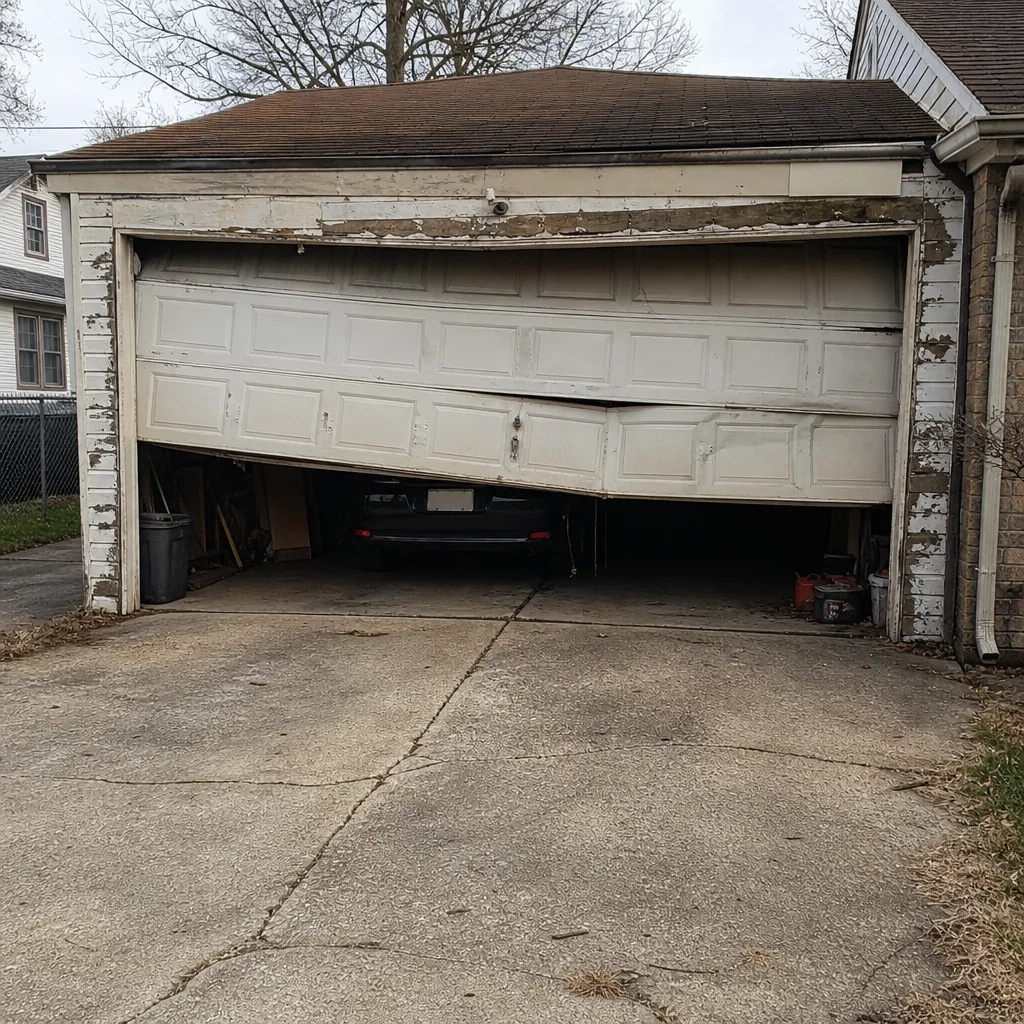 Before
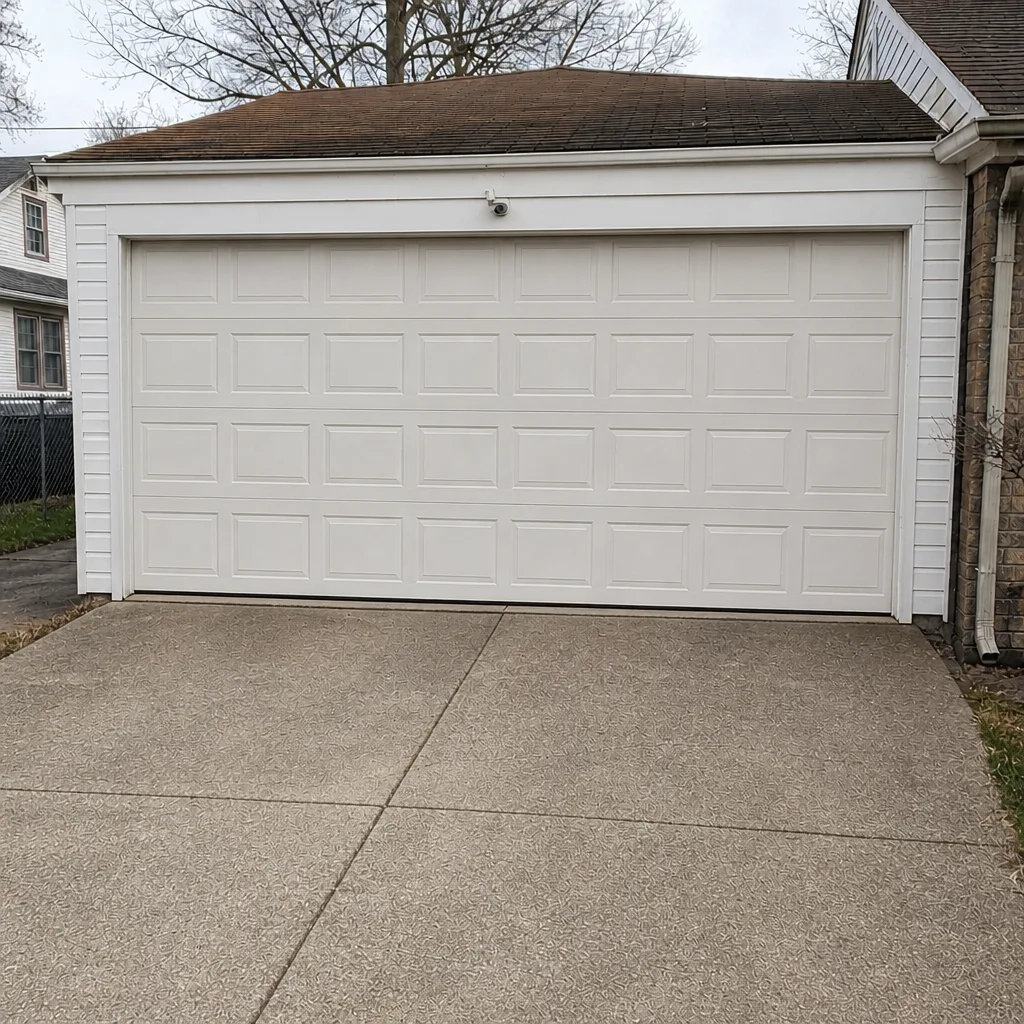 After
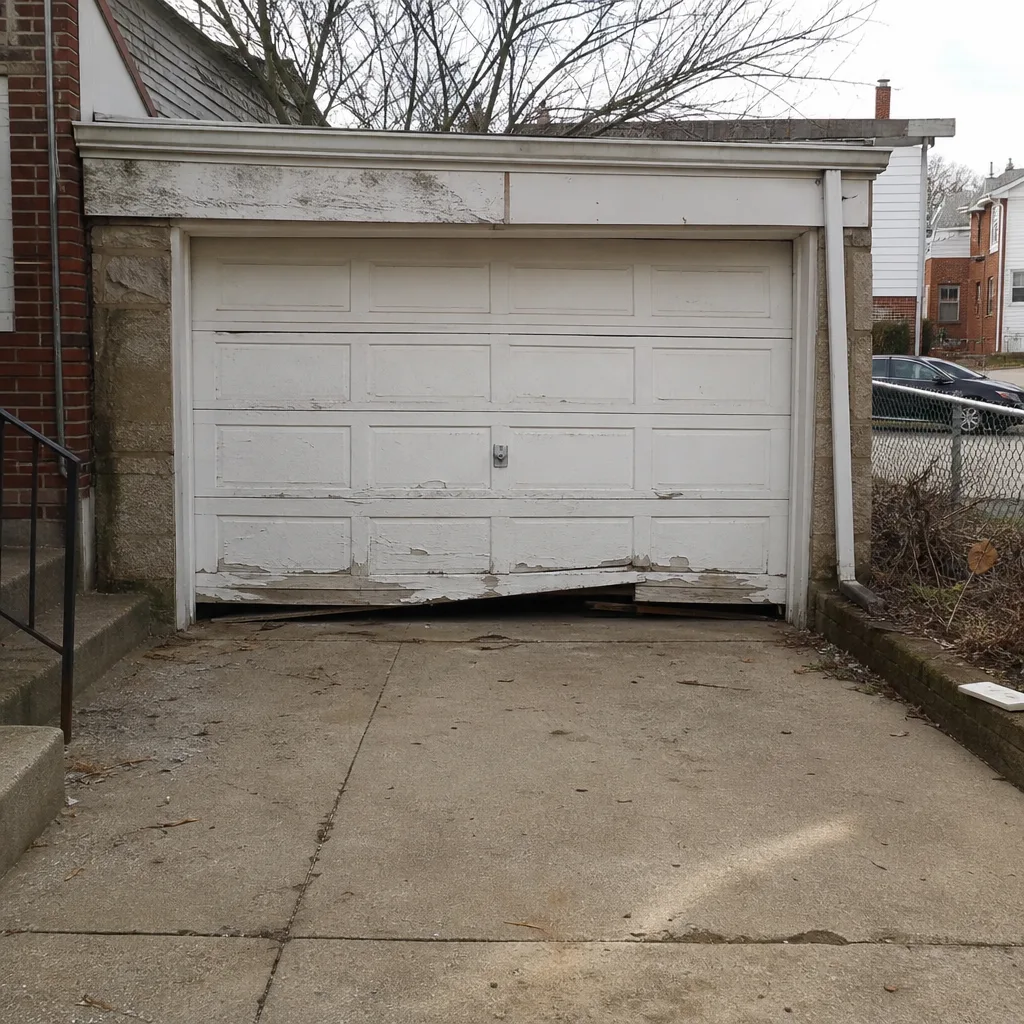 Before
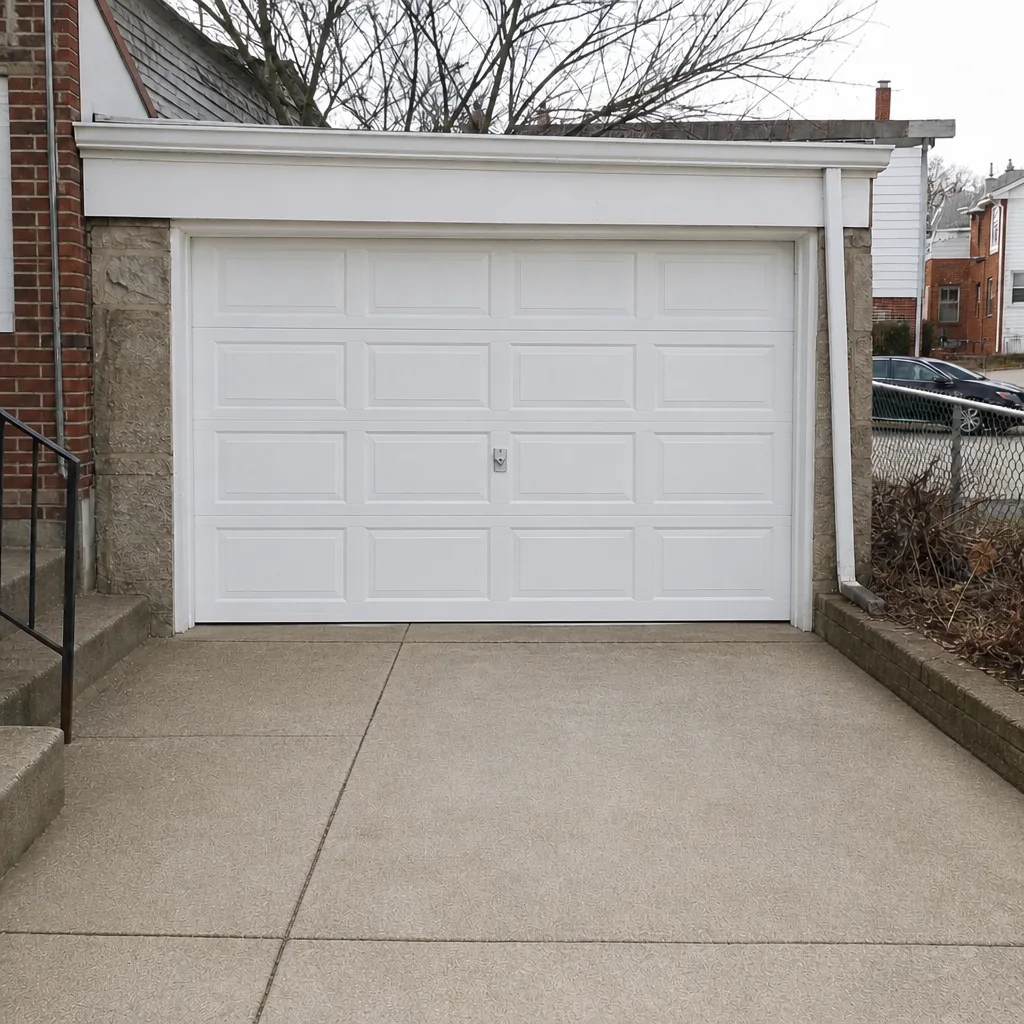 After
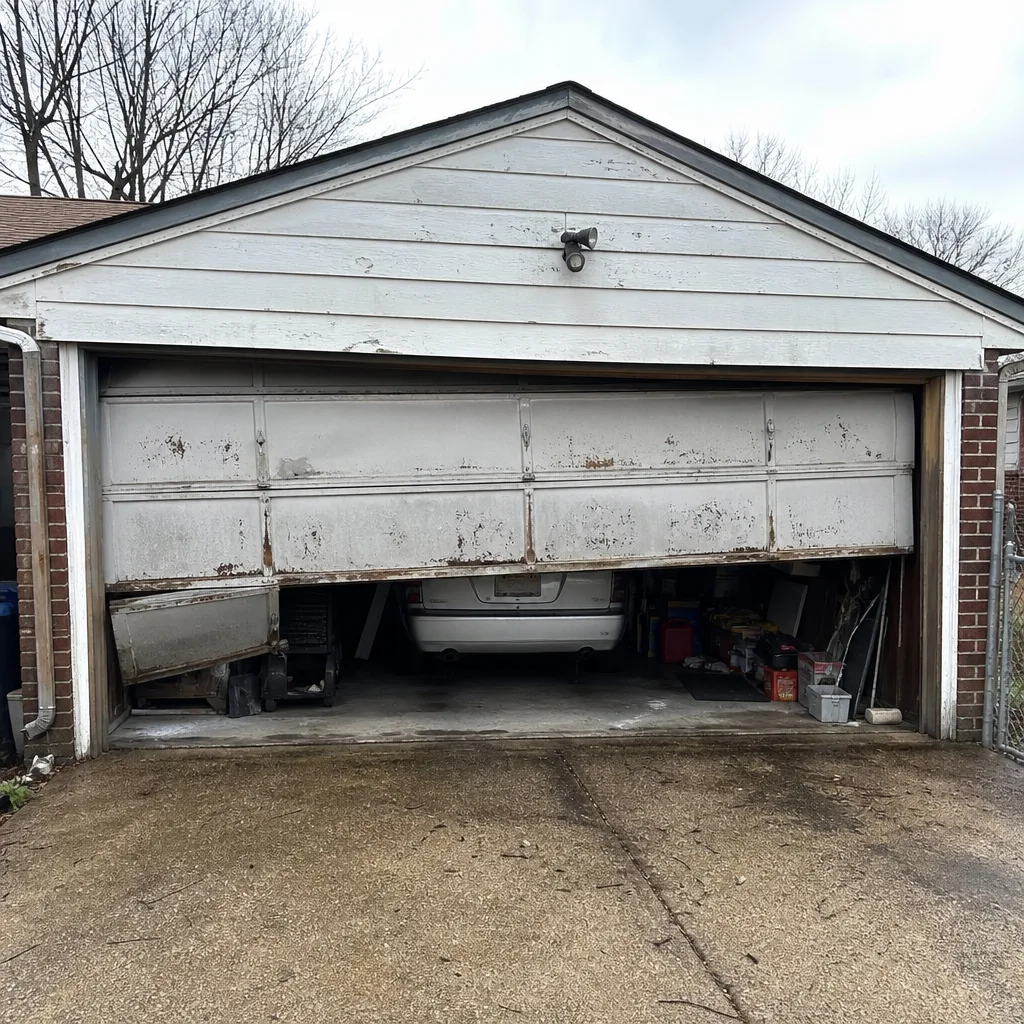 Before
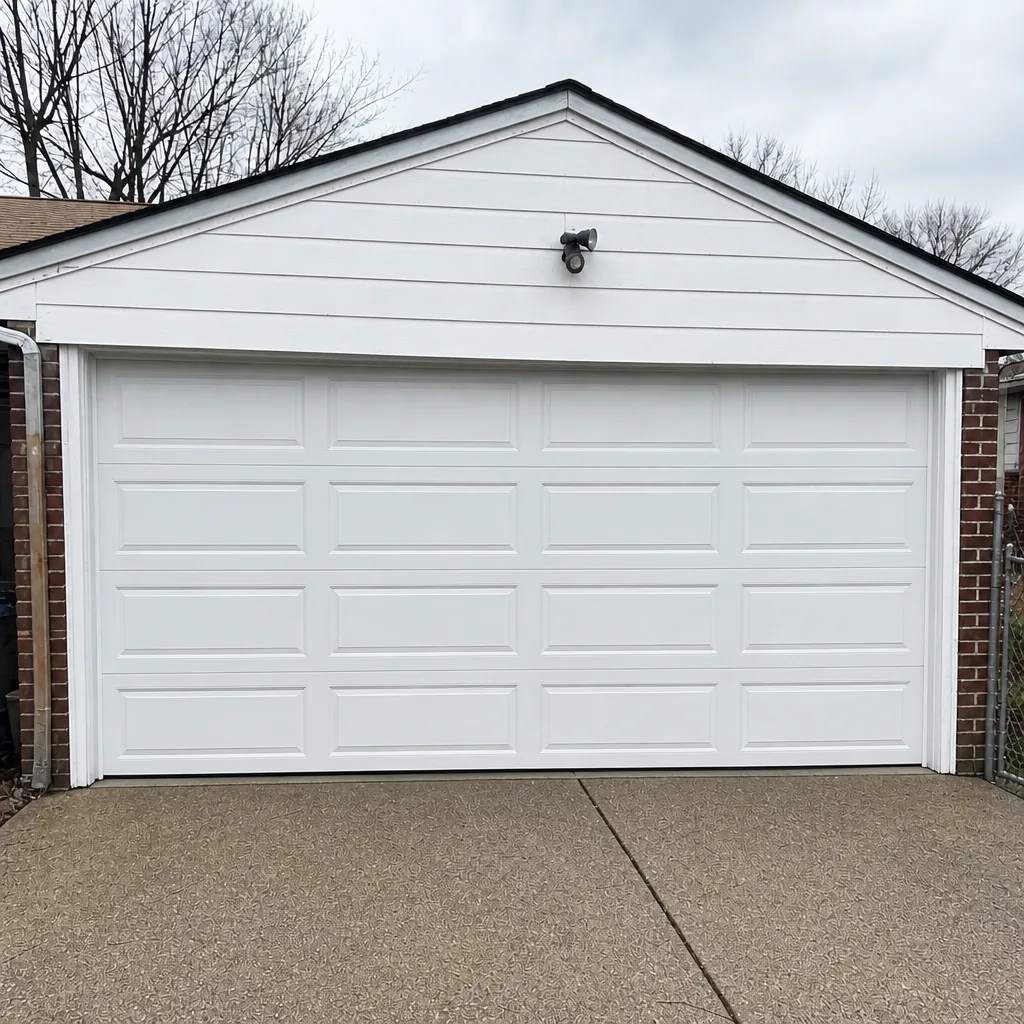 After
When to Call a Professional
Call a professional for any repair involving springs, cables, bottom brackets, or the counterbalance system, and for any door that won’t close, won’t stay up, or has come off its track. Call when you’re installing a new opener and the ceiling is low, the side room is tight, or your mounting points are questionable. Call when a store-bought door doesn’t match your opening. Call when you want a written estimate before deciding. Garage Door Repair Frankford offers free estimates in Frankford, and our technicians have up to 12 years of experience with LiftMaster, Chamberlain, Genie, Raynor, and the other brands you’re likely to find on a local home. Call (855) 337-1053. We answer 24/7. Fast dispatch from 7am to 7pm, Sunday through Friday.
Frequently Asked Questions
No. Garage door torsion and extension springs are under extreme tension, and a DIY replacement can cause serious injury even for experienced homeowners. Spring repair requires proper winding bars, door bracing, and knowledge of your specific spring type. This is the clearest professional-only job in garage door work. Call (855) 337-1053 for a free estimate.
Spring repair is priced per job based on the spring type, the number of springs, and your door’s setup, so there’s no single number. The written estimate sets the final price, and it’s quoted before any work starts. A paired-spring door is usually replaced as a pair. Call (855) 337-1053 for an exact quote; estimates are free.
Safe DIY tasks include lubricating hinges and rollers, tightening loose bolts, replacing the bottom weather seal, cleaning and aligning photo-eye sensors, and wiping down tracks. Anything that holds the door’s weight or spring tension belongs to a professional. When in doubt, ask before you start.
Sometimes, but only if you already own the tools, have a helper, and the install is a straightforward like-for-like on a standard ceiling. Once you add tool costs, hours, and the risk of voiding the opener’s warranty, the savings often shrink. A free written estimate lets you compare the real numbers side by side.
No. We quote and agree on the price before any work starts. The written estimate is the price for the job as described. If we find something during the work that changes the scope, we’ll explain it and agree before proceeding.
The local professionals we connect you with are licensed and insured as their state requires. Our technicians have up to 12 years of experience, and we specialize in garage doors only, including spring repair and emergency service. Call (855) 337-1053 to book a free estimate.
We’re closed Saturday, and we’re open Sunday through Friday, 7am to 7pm. You can call (855) 337-1053 and we answer 24/7; a call outside dispatch hours is booked into the next opening, Sunday through Friday, 7am to 7pm. If a door is stuck partway, stop using it and keep clear until we can get to it.
The Bottom Line
The DIY-versus-pro decision for a garage door isn’t about how handy you are. It’s about physics. Springs, cables, and bottom brackets hold stored energy that can release with force no skill level can out-maneuver, so those jobs belong to a trained professional every time. Lubricating, sealing, tightening, and sensor work are genuinely reasonable for a careful Frankford homeowner. Opener and door installs sit in a gray zone that depends on your tools, warranty, and the specific structure of your garage. For the loaded parts, the honest answer is the one that keeps you safe. Our garage door repair team works on the brand you already have, diagnoses the actual problem rather than patching the symptom, and gets your door fully restored. When you’re ready to know exactly where your project lands, call (855) 337-1053 for a free estimate. We answer 24/7, with fast dispatch from 7am to 7pm, Sunday through Friday, closed Saturday.
Written by the team at Garage Door Repair Frankford.